
Now Reading: Best place to visit in Münster
-
01
Best place to visit in Münster
Best place to visit in Münster
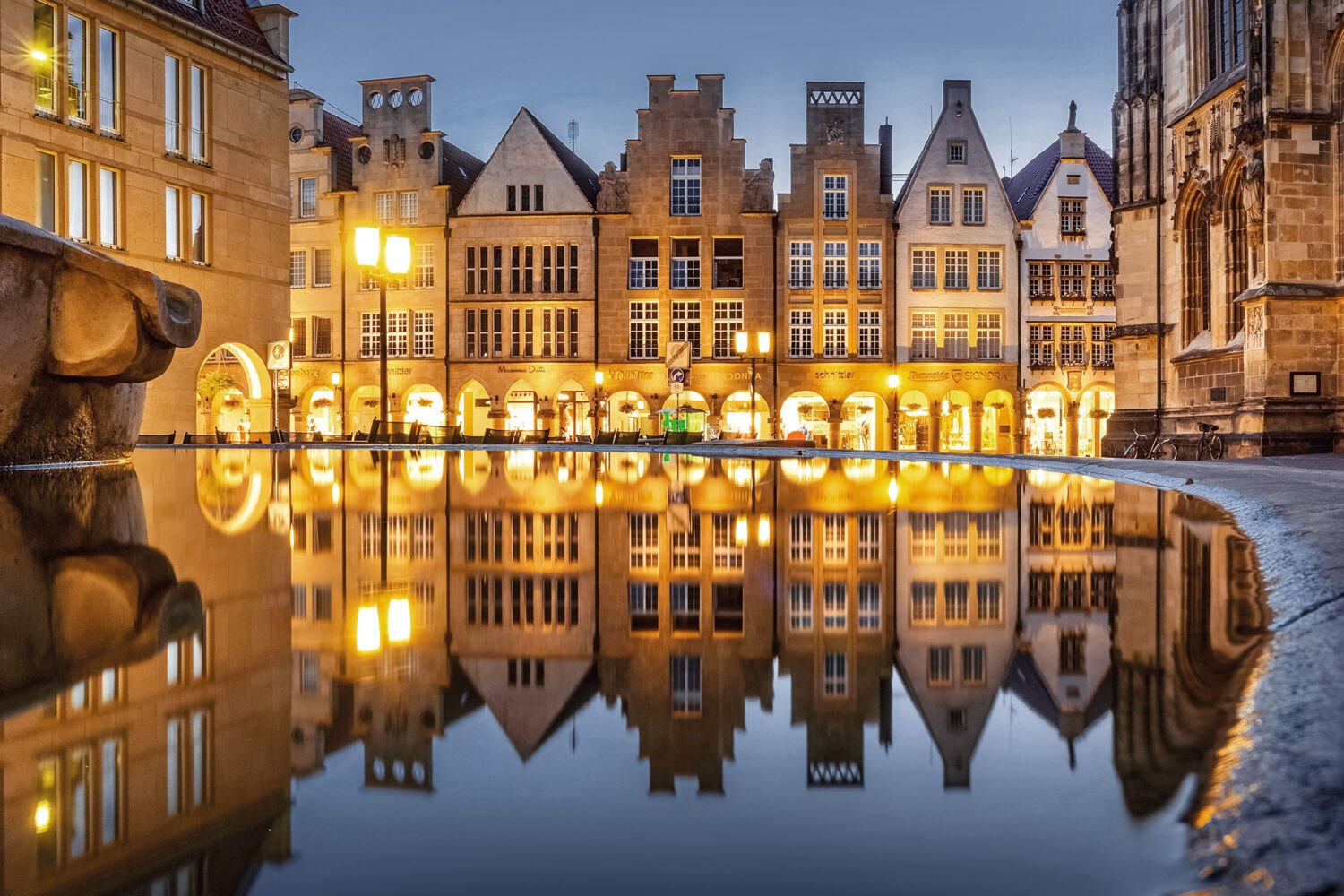
🏛️ 1. Prinzipalmarkt – Historic Heart of Münster

Prinzipalmarkt is Münster’s most famous street and one of Germany’s most beautiful historical marketplaces.
Lined with elegant Gothic and Renaissance buildings featuring traditional arcades, the street reflects the city’s medieval wealth and importance as a trading center.
The beautifully reconstructed buildings preserve Münster’s historical appearance even after much of the city was damaged during World War II.
Today, Prinzipalmarkt contains cafes, boutiques, restaurants, bookstores, and local shops beneath covered walkways that create timeless European atmosphere.
The architecture, stone facades, decorative gables, and church towers surrounding the area make it perfect for photography and sightseeing.
Walking through Prinzipalmarkt feels like stepping into centuries of German history and culture.
⛪ 2. St. Paul’s Cathedral – Spiritual Landmark of Münster

St. Paul’s Cathedral is Münster’s most important religious building and one of the city’s greatest architectural treasures.
Built mainly between the 13th and 14th centuries, the cathedral combines Romanesque and Gothic styles with magnificent towers, stone carvings, stained-glass windows, and peaceful courtyards.
Inside, visitors can admire religious artwork, historical chapels, sculptures, astronomical clocks, and centuries-old decorations.
The cathedral also played an important role during the negotiations of the Peace of Westphalia.
The surrounding cathedral square hosts lively weekly markets where locals buy flowers, fresh food, cheese, bread, and regional products.
The cathedral remains both a spiritual center and a symbol of Münster’s historical identity.
🚲 3. Bicycle Culture – Germany’s Cycling Capital

Münster is internationally famous as Germany’s bicycle capital and one of Europe’s most bike-friendly cities.
Thousands of bicycles travel through the city every day, often outnumbering cars in many areas.
Dedicated cycling paths, bike parking stations, green routes, and safe urban planning make cycling easy and enjoyable for both locals and visitors.
Students, professionals, families, and tourists all use bicycles as their primary transportation.
The city’s relaxed cycling culture contributes greatly to its peaceful atmosphere and environmental sustainability.
Visitors can rent bicycles and explore parks, lakes, historical streets, and nearby countryside in authentic Münster style.
The bicycle culture is one of the city’s most unique and charming characteristics.
🕊️ 4. Peace Hall – Birthplace of European Diplomacy

The Peace Hall inside Münster’s historic Town Hall is one of Europe’s most historically important diplomatic sites.
In 1648, representatives from across Europe gathered here to negotiate the Peace of Westphalia, which ended the Thirty Years’ War and reshaped European politics.
The agreements signed in Münster and nearby Osnabrück helped establish modern concepts of national sovereignty and international diplomacy.
Visitors can explore the beautifully preserved wooden hall where negotiations took place centuries ago.
Portraits, decorations, furniture, and historical artifacts preserve the atmosphere of one of Europe’s most significant political events.
The Peace Hall symbolizes Münster’s identity as a city of peace and international cooperation.
🌳 5. Aasee Lake – Relaxation & Natural Beauty

Aasee Lake is one of Münster’s most popular recreational areas and a favorite destination for locals and tourists alike.
The large artificial lake is surrounded by walking paths, cycling routes, parks, sculptures, cafes, gardens, and open green spaces.
Visitors enjoy sailing, paddle boating, jogging, photography, picnics, and lakeside relaxation throughout the year.
The lake creates peaceful atmosphere only minutes away from the historical city center.
Modern sculptures and art installations around Aasee also add cultural interest to the natural surroundings.
During sunset, reflections of the sky across the calm water create beautiful scenery ideal for evening walks.
Aasee perfectly demonstrates Münster’s balance between urban life and nature.
🏰 6. Münster Castle & Botanical Garden
Münster Castle is a beautiful Baroque palace that today serves as part of the local university.
Originally built as a prince-bishop’s residence during the 18th century, the castle features elegant architecture, large courtyards, and scenic surroundings.
Behind the castle lies the Botanical Garden, a peaceful green space containing exotic plants, flowers, greenhouses, and themed gardens from around the world.
Students, researchers, tourists, and locals enjoy relaxing walks throughout the gardens.
The area combines education, history, science, and natural beauty in one harmonious location.
The castle and botanical garden reflect Münster’s strong connection to academic and intellectual life.
🎨 7. Art, Museums & Academic Culture

Münster is an important university city with vibrant intellectual and artistic atmosphere.
The University of Münster attracts students and scholars from around the world, contributing to the city’s youthful energy and cultural diversity.
Museums throughout the city showcase art, archaeology, history, science, and religious heritage.
Modern art exhibitions, sculpture projects, music festivals, theater performances, and cultural events regularly take place throughout Münster.
The city is especially famous for its international sculpture projects that place contemporary artworks throughout public spaces.
This combination of historical elegance and modern creativity gives Münster unique cultural identity.
🍺 8. Traditional German Cuisine & Local Cafes

Münster offers authentic Westphalian cuisine alongside modern international dining experiences.
Visitors can enjoy sausages, schnitzels, potato dishes, breads, soups, roasted meats, cakes, and regional specialties throughout the city.
Traditional beer gardens and historical taverns provide warm atmosphere and classic German hospitality.
Street cafes around Prinzipalmarkt and the old town create ideal places for relaxing while admiring medieval architecture.
Local bakeries offer fresh pastries, breads, and desserts popular among students and tourists.
The city’s food culture combines comfort, tradition, and relaxed lifestyle.
🌲 9. Green Spaces & Sustainable Urban Life

Münster is widely recognized as one of Germany’s greenest and most environmentally friendly cities.
Tree-lined streets, cycling routes, parks, gardens, lakes, and pedestrian-friendly planning create peaceful urban environment.
The city actively promotes sustainability, public transportation, renewable energy, and eco-friendly development.
Visitors often notice the calm atmosphere, clean streets, and balanced lifestyle that make Münster especially pleasant.
The combination of historical preservation and modern sustainability gives the city unique character.
Münster demonstrates how urban life and environmental responsibility can exist together successfully.
Related artical : Best place to visit in Dortmund