
Now Reading: Best place to visit in Taranto
-
01
Best place to visit in Taranto
Best place to visit in Taranto

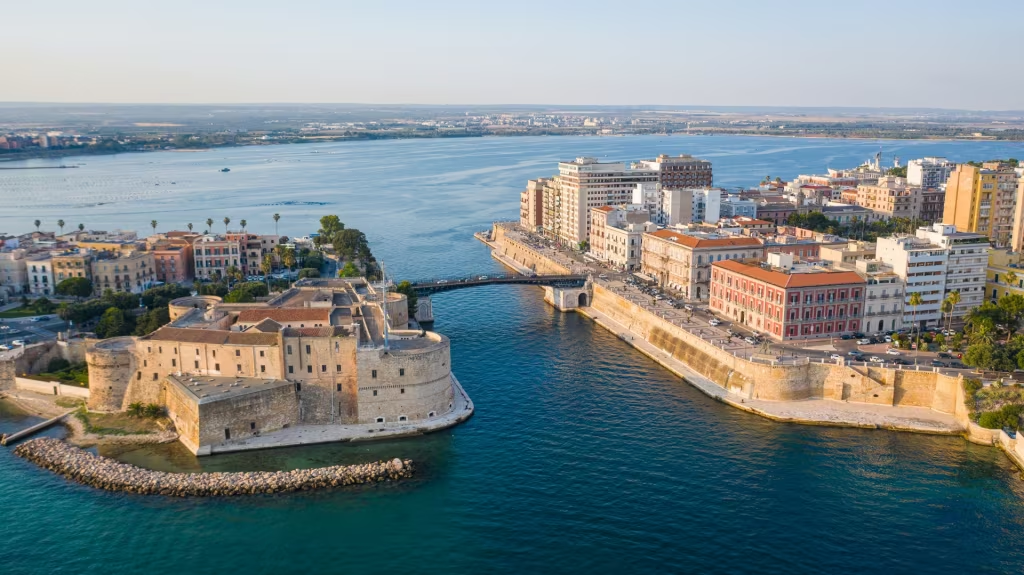
Taranto is one of southern Italy’s most historic and fascinating cities. Located in the Apulia (Puglia) region along the Ionian Sea, Taranto is often referred to as the “City of Two Seas” because it lies between the Mar Grande (Great Sea) and Mar Piccolo (Little Sea). Founded by Greek settlers in the 8th century BC, Taranto was once one of the most powerful and wealthy cities in Magna Graecia, the collection of Greek colonies established throughout southern Italy.
Today, Taranto offers visitors a remarkable combination of ancient history, medieval architecture, beautiful coastlines, archaeological treasures, and authentic southern Italian culture. The city has a rich maritime tradition and remains one of Italy’s most important naval centers.
From exploring ancient Greek ruins and magnificent castles to enjoying stunning sea views and local cuisine, Taranto provides an unforgettable journey through thousands of years of Mediterranean history.
1. Aragonese Castle – The Symbol of Taranto

Aragonese Castle is the city’s most iconic landmark and one of the most impressive fortresses in southern Italy.
Built during the late 15th century by the Kingdom of Aragon, the castle was designed to protect Taranto from invasions and pirate attacks. Its massive towers, thick defensive walls, underground tunnels, and strategic location overlooking the sea made it one of the strongest fortifications in the Mediterranean.
Visitors can explore ancient corridors, military chambers, observation points, and historical exhibits while learning about centuries of warfare and naval history.
The castle offers breathtaking views of the harbor, bridges, and coastline, making it one of the most rewarding attractions in Taranto.
2. Taranto Old Town – A Journey Through Centuries of History

Taranto Old Town occupies a small island situated between the city’s two natural harbors.
Walking through the historic center allows visitors to experience centuries of history reflected in ancient churches, noble palaces, narrow streets, historic homes, and architectural treasures.
The area preserves evidence of Greek, Roman, Byzantine, Norman, and Spanish influences that shaped the city over time.
Visitors can wander through atmospheric alleyways, discover hidden courtyards, admire historic buildings, and experience authentic local life.
The old town remains one of the most fascinating historical districts in southern Italy.
3. National Archaeological Museum of Taranto – One of Italy’s Finest Museums

National Archaeological Museum of Taranto, commonly known as MARTA, is one of the most important archaeological museums in Italy.
The museum houses extraordinary collections of Greek, Roman, and ancient Mediterranean artifacts discovered throughout the region.
Visitors can admire exquisite gold jewelry, sculptures, pottery, coins, weapons, and archaeological treasures dating back thousands of years.
The collection provides valuable insight into Taranto’s role as one of the most powerful Greek cities in ancient Italy.
For history enthusiasts, the museum is an absolute must-visit destination.
4. Cathedral of San Cataldo – Taranto’s Spiritual Heart

Cathedral of San Cataldo is the oldest cathedral in Apulia and one of the city’s most important religious landmarks.
Dedicated to Saint Cataldo, the patron saint of Taranto, the cathedral combines Romanesque, Byzantine, and Baroque architectural styles.
Visitors can admire magnificent chapels, religious artwork, marble decorations, and centuries of ecclesiastical history.
The church remains a major pilgrimage destination and an important symbol of Taranto’s cultural identity.
Its rich heritage makes it one of the city’s most treasured monuments.
5. Swing Bridge – Engineering Marvel Connecting Old and New Taranto

Ponte Girevole is one of the city’s most famous engineering achievements.
Constructed in the late 19th century, the bridge rotates to allow large ships and naval vessels to pass between the two sections of the harbor.
Visitors often gather to watch the bridge open and close, a process that remains an impressive sight even today.
The structure symbolizes Taranto’s long-standing connection to maritime trade and naval operations.
Its unique design makes it one of the most recognizable landmarks in the city.
6. Lungomare Vittorio Emanuele III – Taranto’s Beautiful Waterfront

Lungomare Vittorio Emanuele III offers one of the most scenic waterfront promenades in southern Italy.
Stretching along the coastline, the promenade provides beautiful views of the sea, harbor, bridges, and surrounding architecture.
Visitors can enjoy relaxing walks, cycling, outdoor cafés, and spectacular sunsets while experiencing the maritime atmosphere of the city.
The waterfront serves as a popular gathering place for locals and tourists throughout the year.
Its beauty highlights Taranto’s strong connection to the sea.
7. Temple of Poseidon – A Rare Reminder of Ancient Greece

Temple of Poseidon is one of the few surviving remains of ancient Greek Taranto.
Dating back to the 6th century BC, the temple once stood as a magnificent religious structure dedicated to the Greek god of the sea.
Today, several impressive columns remain standing, offering visitors a glimpse into the city’s ancient Greek origins.
The site serves as a powerful reminder of Taranto’s importance during the era of Magna Graecia.
Its historical significance makes it one of the city’s most valuable archaeological treasures.
8. Mar Piccolo – Taranto’s Unique Inland Lagoon

Mar Piccolo is a unique inland lagoon that plays a vital role in the city’s ecosystem and economy.
The sheltered waters are famous for mussel farming, fishing, and marine biodiversity.
Visitors can enjoy boat tours, birdwatching, photography, and scenic views while learning about the environmental importance of the lagoon.
The area has supported local communities for centuries and remains closely connected to Taranto’s cultural identity.
Its natural beauty provides a peaceful contrast to the urban environment.
9. Taranto’s Beaches – Crystal Waters of the Ionian Coast

The coastline surrounding Taranto features some of the most beautiful beaches in the Apulia region.
Visitors can enjoy golden sands, crystal-clear waters, swimming, snorkeling, and various water sports while relaxing along the Ionian Sea.
Nearby coastal areas offer peaceful escapes from the city and provide excellent opportunities for enjoying the Mediterranean climate.
Many beaches remain less crowded than those found in more famous Italian destinations, creating a more relaxed atmosphere.
The coastal scenery is among Taranto’s greatest natural attractions.
10. Taranto’s Food Culture – Authentic Flavors of Southern Italy

Taranto is renowned for its rich culinary traditions and exceptional seafood.
The city’s location between two seas provides access to fresh fish, mussels, shellfish, octopus, and other Mediterranean specialties that play a central role in local cuisine.
Visitors can enjoy traditional Apulian dishes, handmade pasta, local cheeses, olive oil, fresh vegetables, and regional wines while exploring the city’s restaurants and markets.
Taranto’s famous mussels are considered among the finest in Italy and have been cultivated in the Mar Piccolo for generations.
Food lovers will find countless opportunities to experience authentic southern Italian flavors and hospitality.
Related artical : Best place to visit in Trieste