
Now Reading: Best place to visit in Okayama
-
01
Best place to visit in Okayama
Best place to visit in Okayama

Okayama is one of western Japan’s most historically significant and culturally rich cities. Located in the Chugoku region on the main island of Honshu, Okayama serves as the capital of Okayama Prefecture and is often referred to as the “Land of Sunshine” due to its mild climate and relatively low rainfall. Blessed with fertile plains, beautiful rivers, historic landmarks, and a strategic location between Osaka and Hiroshima, Okayama has played an important role in Japan’s political, economic, and cultural development for centuries.
The city is perhaps best known for its magnificent castle, one of Japan’s most celebrated landscape gardens, and its connection to the famous Japanese folk tale of Momotaro, the Peach Boy. Throughout history, Okayama flourished as a prosperous castle town under powerful feudal lords and later developed into an important center of education, commerce, and transportation.
Today, visitors can explore stunning gardens, ancient shrines, historic districts, museums, riverside landscapes, and nearby cultural treasures while experiencing one of Japan’s most charming and welcoming cities. Okayama successfully combines historical elegance with modern urban convenience, making it one of the country’s most rewarding destinations.
1. Okayama Castle – The Crow Castle of Japan

The magnificent Okayama Castle stands proudly beside the Asahi River and serves as the city’s most recognizable landmark.
Originally constructed in 1597 by the powerful feudal lord Ukita Hideie, the castle became one of the most impressive fortifications in western Japan. Unlike many Japanese castles that feature white exteriors, Okayama Castle is famous for its striking black exterior, earning it the nickname “Crow Castle.”
Although the original structure was destroyed during World War II, the castle was carefully reconstructed and now functions as a museum showcasing samurai culture, regional history, and traditional craftsmanship.
Visitors can enjoy panoramic views of the city while learning about the political and military history that shaped Okayama during Japan’s feudal era.
2. Korakuen Garden – One of Japan’s Three Great Gardens

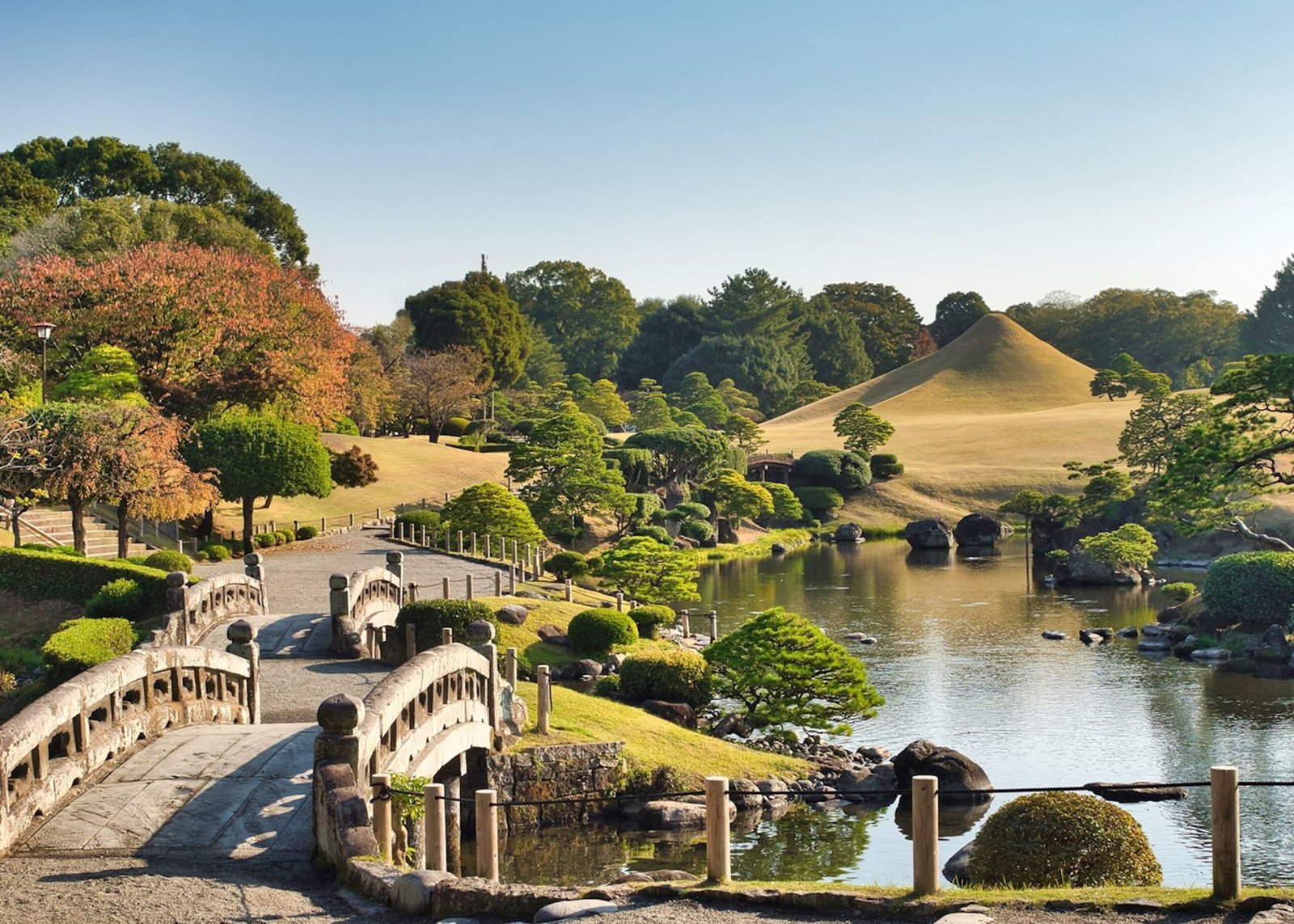
Widely regarded as one of Japan’s most beautiful landscape gardens, Korakuen is considered one of the country’s Three Great Gardens.
Established in 1700 by Lord Ikeda Tsunamasa, the garden was originally created as a place of relaxation and entertainment for feudal rulers. Covering more than 13 hectares, Korakuen features expansive lawns, ponds, streams, tea houses, bridges, hills, and seasonal flower displays.
Unlike many traditional Japanese gardens that focus on enclosed spaces, Korakuen emphasizes openness and broad scenic views. Every section of the garden was carefully designed to create harmony between natural beauty and artistic composition.
Visitors throughout the year enjoy cherry blossoms in spring, lush greenery in summer, colorful foliage in autumn, and peaceful snowy landscapes during winter.
Korakuen remains one of Japan’s greatest masterpieces of landscape architecture.
3. The Legend of Momotaro – Okayama’s Cultural Identity

Okayama is widely associated with the famous Japanese folk hero Momotaro, whose story is known throughout the country.
According to legend, Momotaro was born from a giant peach discovered floating down a river by an elderly couple. As he grew older, he embarked on a journey to defeat demons threatening the land, accompanied by loyal animal companions including a dog, monkey, and pheasant.
The story symbolizes courage, kindness, and determination. Throughout Okayama, visitors can find statues, monuments, artwork, and attractions celebrating this beloved folk tale.
The city’s strong connection to Momotaro has become an important part of its cultural identity and tourism appeal.
4. Kibitsu Shrine – A Sacred Site of Ancient Legends

Among Okayama’s most important religious landmarks is Kibitsu Shrine.
The shrine is associated with ancient legends believed to have inspired the Momotaro story and has served as an important spiritual center for centuries. Its unique architectural style, known as Kibitsu-zukuri, is designated as a National Treasure of Japan.
Visitors are particularly impressed by the shrine’s long covered corridor, which extends through beautifully landscaped grounds and provides a peaceful environment for reflection.
The shrine remains a place of worship while preserving important aspects of Japanese mythology and tradition.
5. Kurashiki Bikan Historical Quarter – A Journey into Old Japan

A short distance from Okayama City lies the famous Kurashiki Bikan Historical Quarter.
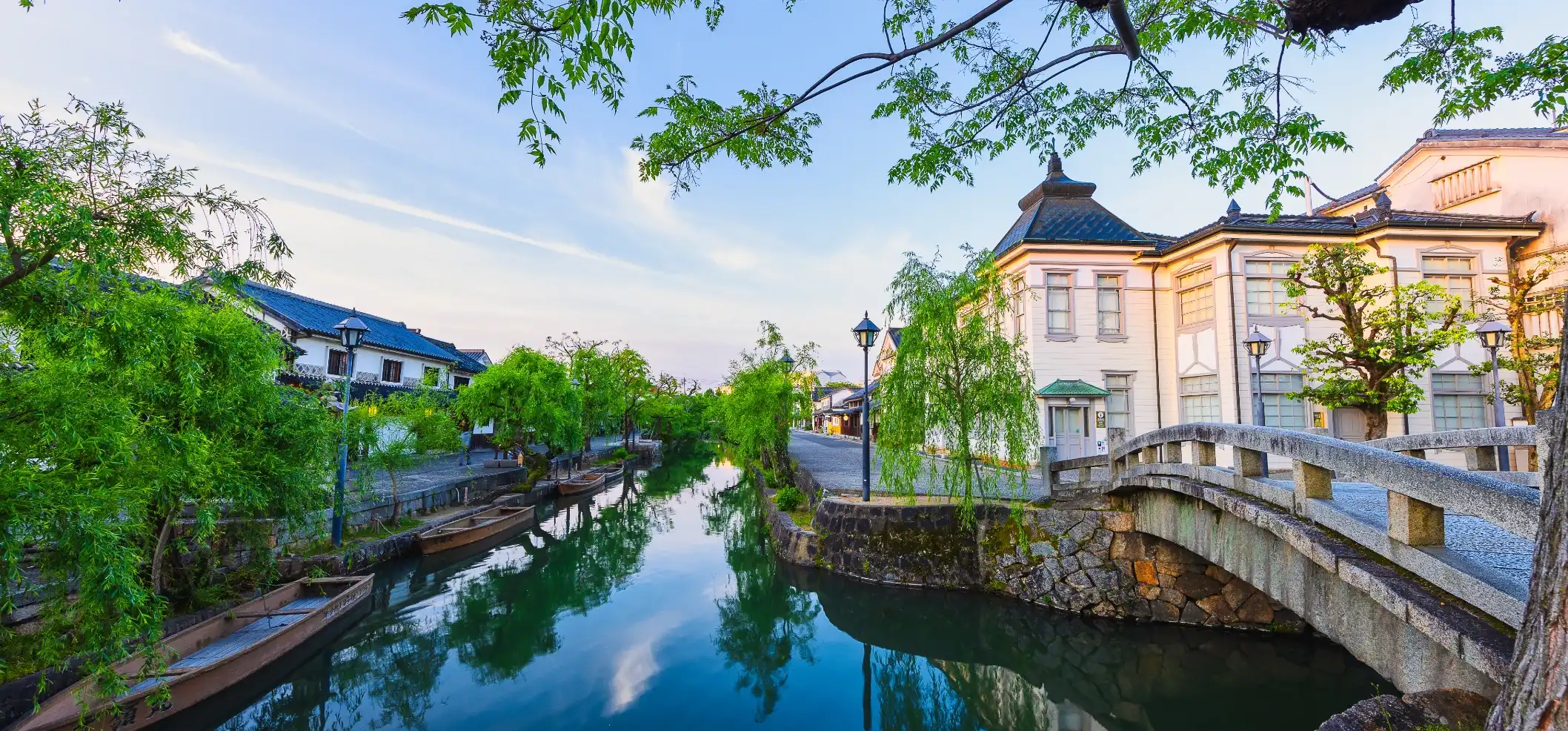
This beautifully preserved district features white-walled warehouses, traditional merchant houses, stone bridges, and scenic canals lined with willow trees. During the Edo period, Kurashiki prospered as an important center for rice distribution and trade.
Today, visitors can explore museums, artisan shops, cafés, galleries, and cultural attractions while experiencing the atmosphere of historical Japan.
The district is considered one of the finest preserved merchant towns in the country.
6. Saijo Inari – One of Japan’s Largest Inari Shrines

The impressive Saijo Inari is one of Japan’s most important Inari shrines.
Dedicated to the deity of prosperity, agriculture, and business success, the shrine attracts worshippers from across the country. Its towering red torii gates, grand architecture, and spiritual atmosphere create a memorable experience for visitors.
Festivals and seasonal events held throughout the year further enhance its significance within the local community.
The shrine remains a powerful symbol of faith and cultural continuity.
7. Okayama’s Fruit Heritage – The Kingdom of Peaches and Grapes

Okayama is often called the “Fruit Kingdom” of Japan due to its exceptional agricultural production.
The region’s favorable climate and fertile soil support the cultivation of premium peaches, grapes, pears, and other fruits that are highly prized throughout the country. White peaches from Okayama are especially famous for their sweetness, fragrance, and delicate texture.
The city’s association with peaches also strengthens its connection to the Momotaro legend. Visitors frequently enjoy fruit-picking experiences, local markets, and specialty desserts featuring regional produce.
Agriculture remains an important part of Okayama’s economy and cultural identity.
8. Handayama Botanical Garden – A Natural Sanctuary

Nature lovers can explore the beautiful Handayama Botanical Garden.
Situated on a hillside overlooking the city, the garden contains thousands of plant species from Japan and around the world. Walking trails, observation areas, seasonal flower displays, and educational exhibits provide visitors with opportunities to appreciate biodiversity and horticulture.
The garden is particularly popular during cherry blossom season and autumn when vibrant colors transform the landscape.
Its peaceful atmosphere offers a refreshing escape from urban life.
9. The Asahi River – Lifeblood of the City

Flowing through the center of the city, the Asahi River has played a vital role in Okayama’s development.
For centuries, the river supported transportation, agriculture, commerce, and daily life. Today, riverside parks, cycling paths, and recreational spaces provide opportunities for residents and visitors to enjoy the natural environment.
The river also enhances the beauty of landmarks such as Okayama Castle and Korakuen Garden, creating some of the city’s most picturesque scenery.
Its continued importance reflects the close relationship between Okayama and its natural surroundings.
10. Modern Okayama – A Gateway to Western Japan

While deeply rooted in history, modern Okayama has evolved into a vibrant regional center known for education, healthcare, transportation, and economic development.
The city serves as a major transportation hub connecting western Japan through high-speed rail networks, highways, and regional airports. Modern shopping districts, universities, cultural institutions, and business centers contribute to a high quality of life and a strong local economy.
Urban development projects continue to enhance sustainability, accessibility, and public spaces while preserving the city’s historical character.
This balance between tradition and progress makes Okayama one of Japan’s most livable and attractive cities.
Related artical : Best place to visit in Kumamoto