
Now Reading: Best place to visit in Nara
-
01
Best place to visit in Nara
Best place to visit in Nara
Nara is one of the most historically important cities in Japan and is often regarded as the birthplace of Japanese civilization. Located in the Kansai region, Nara served as Japan’s first permanent capital from 710 to 794 during the Nara Period, a transformative era that laid the foundations for the nation’s government, culture, religion, and architecture. Today, Nara remains one of Japan’s most treasured cultural destinations, attracting millions of visitors who come to explore its ancient temples, sacred shrines, historic monuments, and beautiful natural surroundings.
For centuries, Nara was the political and spiritual center of Japan. During its time as the capital, known as Heijo-kyo, the city became a hub of Buddhism, scholarship, art, and international exchange. Influences from China and Korea helped shape the city’s development, resulting in the construction of grand temples, palaces, and government institutions that reflected the sophistication of early Japanese society.
Today, Nara is recognized as a UNESCO World Heritage destination and is home to some of the country’s most significant cultural treasures. Visitors can encounter freely roaming deer, ancient wooden structures, magnificent Buddhist statues, and sacred forests that have been preserved for more than a thousand years.
1. Nara Park – The City’s Most Famous Attraction

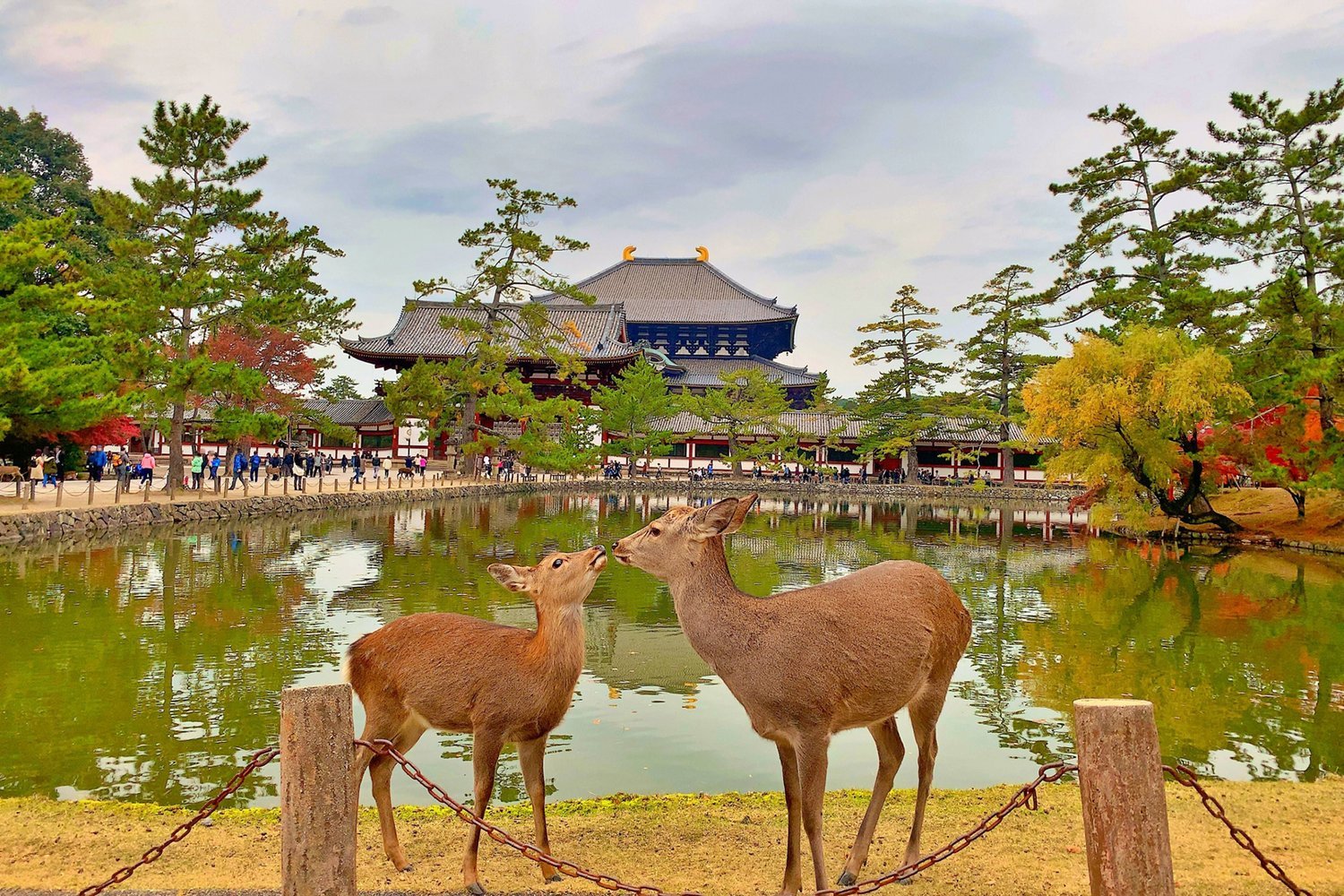
The world-famous Nara Park is one of Japan’s most beloved public spaces and home to more than a thousand freely roaming deer.
Covering hundreds of hectares, the park surrounds many of Nara’s most important cultural landmarks and provides a unique blend of nature and history. The deer, considered sacred messengers of the gods in Shinto tradition, have lived in the area for centuries and have become symbols of the city.
Visitors can purchase special deer crackers and interact with the animals while exploring scenic pathways, ponds, gardens, and historic sites. Throughout the year, the park transforms with seasonal beauty, including cherry blossoms in spring and vibrant foliage in autumn.
Nara Park remains one of the most iconic destinations in Japan and a defining feature of the city’s identity.
2. Todai-ji Temple – Home of the Great Buddha

The magnificent Todai-ji is one of Japan’s most important Buddhist temples and a masterpiece of ancient architecture.
Founded in the eighth century, the temple was established to serve as the head temple of all provincial Buddhist temples throughout Japan. Its most famous feature is the enormous bronze statue of Buddha, known as the Daibutsu, which stands approximately 15 meters tall and is among the largest bronze Buddha statues in the world.
The temple’s Great Buddha Hall is one of the largest wooden buildings ever constructed and demonstrates the engineering achievements of ancient Japan. Visitors from around the world come to admire the scale and beauty of this extraordinary monument.
Todai-ji remains a powerful symbol of Nara’s spiritual and cultural heritage.
3. Kasuga Taisha – The Shrine of a Thousand Lanterns

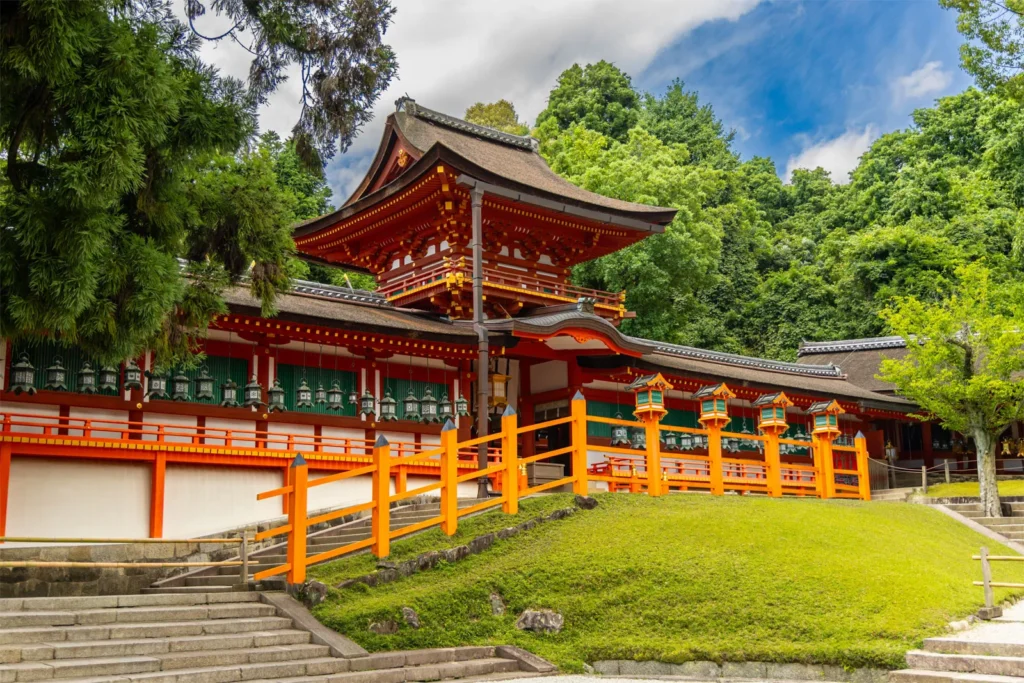
Established in 768, Kasuga Taisha is one of Japan’s most beautiful and important Shinto shrines.
The shrine is famous for its thousands of bronze and stone lanterns donated by worshippers over centuries. These lanterns create a magical atmosphere, particularly during special illumination ceremonies held twice each year.
Surrounded by ancient forests considered sacred for generations, Kasuga Taisha offers visitors a peaceful and spiritual environment unlike any other.
The shrine remains an active center of worship and an important example of traditional Japanese religious architecture.
4. Heijo Palace – The Heart of Ancient Japan

The impressive Heijō Palace once served as the administrative center of Japan during the Nara Period.
When Nara became the nation’s capital in 710, government offices, ceremonial halls, and imperial residences were constructed within this vast complex. Inspired by Chinese city planning, Heijo Palace reflected Japan’s growing sophistication and political organization.
Today, reconstructed buildings and archaeological remains allow visitors to explore the origins of Japan’s centralized government and imperial administration.
The site offers invaluable insight into one of the most important periods in Japanese history.
5. Kofuku-ji Temple – A Symbol of Aristocratic Power

The historic Kofuku-ji played a central role in the political and religious life of ancient Japan.
Founded in the seventh century, the temple was closely associated with the powerful Fujiwara clan, one of the most influential aristocratic families in Japanese history. Its elegant five-story pagoda has become one of Nara’s most recognizable landmarks.
Visitors can explore temple halls, museums, gardens, and collections of Buddhist art that illustrate centuries of cultural development.
Kofuku-ji remains an essential destination for understanding Nara’s historical significance.
6. Naramachi – Preserving the Atmosphere of Old Japan

The charming Naramachi district preserves the atmosphere of traditional Japan.
Once a bustling merchant quarter, Naramachi features narrow streets lined with historic wooden houses, shops, workshops, cafés, and museums. Many buildings have been carefully restored, allowing visitors to experience daily life as it existed centuries ago.
Walking through the district offers a fascinating contrast to the grand temples and shrines that dominate much of Nara’s landscape.
Naramachi remains one of the city’s most authentic cultural experiences.
7. Mount Wakakusa – Panoramic Views of Nara

Overlooking the city, Mount Wakakusa offers some of the most spectacular views in the region.
The gently sloping hill provides panoramic vistas of Nara’s temples, forests, and urban landscape. Visitors can hike to the summit while enjoying scenic surroundings and encounters with the area’s famous deer.
Each year, the mountain hosts the traditional Wakakusa Yamayaki festival, during which the hillside is ceremonially burned in a dramatic display visible throughout the city.
The mountain remains one of Nara’s most beloved natural landmarks.
8. Toshodai-ji Temple – A Monument to Buddhist Scholarship

Founded in 759 by the Chinese monk Jianzhen, Tōshōdai-ji is one of the finest surviving examples of Nara-period architecture.
The temple played a crucial role in spreading Buddhist teachings and cultural knowledge throughout Japan. Its beautifully preserved buildings, statues, and gardens provide valuable insight into the religious and artistic achievements of the eighth century.
Visitors can admire ancient wooden structures that have survived for more than a millennium.
The temple remains a UNESCO World Heritage Site and an important center of Buddhist history.
9. Yakushi-ji Temple – A Masterpiece of Ancient Architecture

The magnificent Yakushi-ji is among Japan’s most celebrated Buddhist temples.
Established in the seventh century, the temple was dedicated to Yakushi Nyorai, the Buddha of Healing. The elegant pagodas, golden halls, and sacred statues represent some of the highest achievements of early Japanese architecture and religious art.
Extensive restoration efforts have preserved the temple’s beauty while maintaining its historical authenticity.
Yakushi-ji continues to serve as an active religious center and cultural treasure.
10. Nara’s Legacy as Japan’s First Capital

Nara’s greatest significance lies in its role as Japan’s first permanent capital.
During the Nara Period, the foundations of Japanese government, law, religion, literature, and culture were established. Buddhism flourished, diplomatic relations expanded, and artistic achievements transformed society.
Many of the institutions and traditions that emerged during this period continue to influence Japan today. The city’s numerous UNESCO World Heritage Sites preserve this remarkable legacy for future generations.
Visitors exploring Nara encounter not only beautiful monuments but also the origins of Japanese civilization itself.
Related artical : Best place to visit in Kagoshima