
Now Reading: Best place to visit in Baalbek
-
01
Best place to visit in Baalbek
Best place to visit in Baalbek

Baalbek is one of the most extraordinary archaeological destinations in the world and home to some of the largest and best-preserved Roman temples ever constructed. Located in Lebanon’s fertile Beqaa Valley, Baalbek has been a center of civilization, religion, and culture for thousands of years. Its magnificent ruins have earned it recognition as a UNESCO World Heritage Site and one of the Middle East’s most important historical treasures.
Known in ancient times as Heliopolis, meaning “City of the Sun,” Baalbek was a major religious center dedicated to powerful deities worshipped by successive civilizations. The city’s monumental temples, massive stone structures, and remarkable engineering achievements continue to amaze historians, archaeologists, and travelers from around the globe.
Throughout its history, Baalbek was influenced by Phoenician, Greek, Roman, Byzantine, Arab, and Ottoman civilizations. Each culture contributed to the city’s development, leaving behind architectural wonders and historical landmarks that survive to this day.
Visitors to Baalbek can explore colossal temples, ancient courtyards, museums, mosques, and cultural sites while experiencing one of the greatest archaeological complexes in the world.
The following attractions represent the best places to visit in Baalbek.
1. Baalbek Archaeological Complex

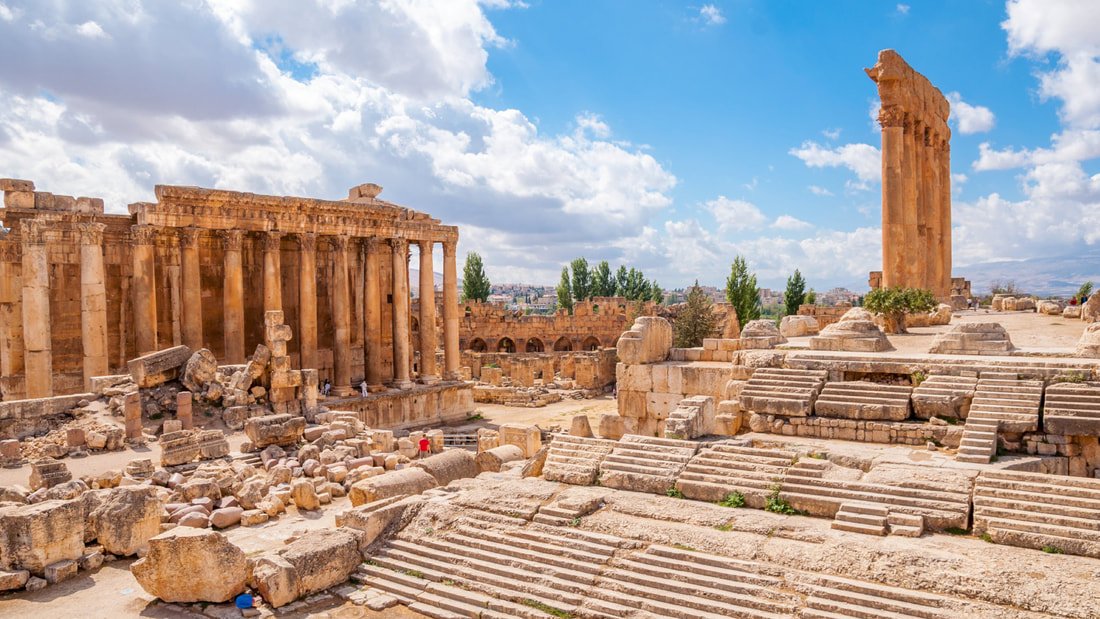
The Baalbek Archaeological Complex is the city’s most famous attraction and one of the most significant Roman sites on Earth. Covering a vast area filled with monumental temples, courtyards, columns, and sacred spaces, the complex represents the height of Roman architectural achievement.
Visitors can spend hours exploring the enormous structures and learning about the civilizations that transformed Baalbek into one of the most important religious centers of the ancient world.
The scale of the ruins is astonishing, with massive stone blocks and towering columns that continue to inspire admiration more than two thousand years after their construction.
History
The site originally served as a sacred Phoenician sanctuary before becoming a major Roman religious center. Construction of the grand temples began during the first century BCE and continued for centuries, creating one of the most impressive architectural complexes in the Roman Empire.
2. Temple of Jupiter

The Temple of Jupiter is the largest and most famous structure in Baalbek. Originally supported by fifty-four colossal columns, the temple was dedicated to Jupiter, the supreme god of Roman mythology.
Today, six massive columns remain standing and have become an iconic symbol of Lebanon’s historical heritage. Their enormous size demonstrates the extraordinary engineering capabilities of Roman builders.
Visitors are often overwhelmed by the scale and grandeur of the monument, which remains one of the greatest architectural achievements of antiquity.
History
Construction began during the reign of Emperor Augustus and continued under several Roman emperors. The temple stood at the heart of the religious complex and attracted pilgrims from across the Roman Empire.
3. Temple of Bacchus

The Temple of Bacchus is widely regarded as one of the best-preserved Roman temples in the world. Despite being slightly smaller than the Temple of Jupiter, its exceptional state of preservation allows visitors to appreciate the intricate details of Roman architecture.
The temple features magnificent columns, decorative carvings, sculpted reliefs, and monumental entrances that reveal the artistic sophistication of the Roman Empire.
History
Dedicated to Bacchus, the Roman god of wine and celebration, the temple was completed during the second century CE. It remains one of the finest surviving examples of Roman religious architecture anywhere in the world.
4. Temple of Venus

The Temple of Venus is one of the most elegant structures within Baalbek. Unlike the massive temples dedicated to Jupiter and Bacchus, this smaller sanctuary features graceful curves and unique architectural elements.
Its distinctive design demonstrates the diversity of Roman religious architecture and adds another fascinating dimension to the archaeological site.
History
Constructed during the Roman period, the temple was dedicated to Venus, the goddess of love and beauty. Its artistic design reflects the importance of aesthetics within Roman religious traditions.
5. Great Court of Baalbek

The Great Court served as a ceremonial gathering area where religious festivals, public events, and sacred rituals took place.
Surrounded by impressive architectural features, the court provided a grand entrance to the temple complex and demonstrated the wealth and importance of the city.
Visitors can walk through the enormous space and imagine the crowds that once gathered for religious celebrations thousands of years ago.
History
The court was developed as part of the Roman expansion of the sanctuary and became a focal point for religious life in ancient Heliopolis.
6. Stone of the Pregnant Woman

The Stone of the Pregnant Woman is one of the largest carved stones ever created by human beings. Located in an ancient quarry near Baalbek, the massive block continues to puzzle researchers and engineers.
Its enormous dimensions have made it one of the most famous megalithic structures in the world.
History
The stone was quarried during the Roman period and was likely intended for use in temple construction. Although never transported to the main complex, it remains an extraordinary example of ancient engineering and stoneworking techniques.
7. Baalbek Museum
The Baalbek Museum preserves many of the artifacts discovered during excavations of the ancient city.
Visitors can view sculptures, inscriptions, architectural fragments, coins, ceramics, and archaeological discoveries that provide deeper insight into Baalbek’s long history.
The museum serves as an important educational resource for understanding the significance of the archaeological complex.
History
The museum was established to protect and display valuable discoveries uncovered throughout decades of archaeological research.
8. Ras El Ain Area

Ras El Ain is a beautiful natural area known for its springs and green landscapes. For centuries, these water sources supported agriculture and human settlement throughout the region.
Visitors can enjoy peaceful surroundings while learning about the importance of water management in ancient civilizations.
History
The springs have supplied water to local communities since ancient times and played a crucial role in the development of Baalbek.
9. Sayyida Khawla Shrine

The Sayyida Khawla Shrine is one of the most important religious sites in Baalbek and attracts visitors from across Lebanon and the wider region.
The shrine’s beautiful architecture and spiritual significance make it a prominent landmark within the city.
History
Dedicated to Sayyida Khawla, a respected figure in Islamic tradition, the shrine became an important pilgrimage destination and remains a center of religious devotion.
10. Baalbek International Festival Venue

The Baalbek International Festival Venue transforms the ancient ruins into one of the world’s most spectacular cultural stages.
Concerts, theatrical performances, and artistic events take place against the backdrop of Roman temples, creating an unforgettable experience for audiences.
The festival has become one of the Middle East’s most prestigious cultural events.
History
Established during the twentieth century, the festival helped promote Baalbek as both a historical destination and a center of artistic excellence. International performers and cultural figures have participated in events held among the ancient ruins.
Related artical : Best place to visit in Byblos