
Now Reading: Best place to visit in Lebanon
-
01
Best place to visit in Lebanon
Best place to visit in Lebanon
1. Jeita Grotto

Overview and History
Jeita Grotto is Lebanon’s most famous natural attraction and one of the most remarkable cave systems in the world. Located in the Nahr al-Kalb Valley north of Beirut, the grotto consists of two interconnected limestone caves stretching for nearly nine kilometers. Over millions of years, water erosion created magnificent chambers filled with stalactites, stalagmites, columns, and other geological formations that continue to amaze visitors.
The caves have been known since prehistoric times, with archaeological evidence showing that ancient humans used the area for shelter. The lower cave was explored by modern researchers in the nineteenth century, while the upper galleries were discovered in the 1950s. Since then, Jeita Grotto has become one of Lebanon’s most visited attractions and an international symbol of the country’s natural heritage.
Visitors experience the lower cave through a peaceful boat ride along an underground river, while the upper cave offers walking paths through enormous chambers illuminated to highlight the spectacular rock formations. The site’s beauty, silence, and geological significance make it one of the most unforgettable destinations in the Middle East.
2. Baalbek Roman Temples

Overview and History
Baalbek is home to one of the most impressive Roman archaeological complexes ever constructed. Located in the Bekaa Valley, the site contains monumental temples dedicated to Jupiter, Bacchus, and Venus. The scale of the structures, massive stone blocks, and extraordinary engineering achievements have fascinated travelers and historians for centuries.
The city originally served as a religious center for ancient civilizations before becoming a major sanctuary under Roman rule. Beginning in the first century BCE, Roman architects transformed Baalbek into one of the empire’s grandest sacred sites. The Temple of Jupiter featured colossal columns and immense courtyards, while the Temple of Bacchus remains among the best-preserved Roman temples in the world.
Today, visitors can walk through ancient gateways, admire towering columns, explore ceremonial halls, and witness architectural achievements that have survived for nearly two thousand years. The site’s UNESCO World Heritage status reflects its global historical significance.
3. Byblos Old City

Overview and History
Byblos is widely recognized as one of the oldest continuously inhabited cities on Earth. With a history spanning more than seven millennia, the city offers visitors an extraordinary journey through human civilization. Located along Lebanon’s Mediterranean coast, Byblos combines archaeological treasures, medieval architecture, traditional souks, and a charming harbor.
The city played a vital role in Phoenician maritime trade and maintained close commercial ties with ancient Egypt. Byblos became famous for exporting cedar wood and papyrus, influencing cultures throughout the Mediterranean. The city’s name eventually became associated with books and literature, contributing to the origin of the word “Bible.”
Visitors can explore ancient temples, Roman roads, Crusader fortifications, archaeological excavations, traditional markets, and the historic harbor. Every corner of Byblos reveals layers of history, making it one of Lebanon’s most fascinating destinations.
4. Pigeon Rocks

Overview and History
Pigeon Rocks are among the most recognizable landmarks in Lebanon. Rising dramatically from the Mediterranean Sea off the coast of Beirut, these massive limestone formations have become symbols of the Lebanese capital and are featured in countless photographs and travel publications.
Formed through millions of years of geological activity and coastal erosion, the rocks stand as natural monuments overlooking the sea. Historically, sailors used them as navigation markers while approaching Beirut’s coastline.
The surrounding Corniche promenade offers some of the city’s most beautiful views, especially during sunset when the sky and sea are illuminated with vibrant colors. Visitors often take boat trips around the formations to fully appreciate their scale and beauty.
5. National Museum of Beirut

Overview and History
National Museum of Beirut is Lebanon’s most important museum and the country’s leading institution for archaeological preservation. The museum houses thousands of artifacts representing civilizations that shaped Lebanon over several millennia.
Established during the twentieth century, the museum contains collections from Phoenician, Roman, Byzantine, Mamluk, and Ottoman periods. During Lebanon’s civil war, extraordinary efforts were made to protect the collection from destruction, ensuring the survival of priceless historical treasures.
Visitors can admire ancient sarcophagi, statues, mosaics, jewelry, inscriptions, pottery, and mummies. The museum offers a comprehensive overview of Lebanon’s rich and diverse cultural heritage.
6. Mohammad Al-Amin Mosque

Overview and History
Mohammad Al-Amin Mosque is one of Beirut’s most iconic landmarks. Located in the heart of downtown Beirut, the mosque is known for its magnificent blue dome, towering minarets, and elegant architectural design inspired by classical Ottoman styles.
Construction of the mosque began in the early twenty-first century, transforming it into one of the city’s most recognizable symbols. Its grand scale and beautiful craftsmanship attract visitors from around the world.
The interior features intricate calligraphy, ornate chandeliers, decorative stonework, and spacious prayer halls. The mosque stands as a testament to Lebanon’s religious and architectural heritage.
7. Harissa

Overview and History
Harissa is one of Lebanon’s most popular pilgrimage and tourism destinations. Situated high above Jounieh Bay, the town offers spectacular views of the Mediterranean coastline and surrounding mountains.
Visitors often reach Harissa via cable car, enjoying breathtaking panoramas throughout the journey. The elevated location and scenic landscapes make it one of the country’s most visited attractions.
Throughout the years, Harissa has become a symbol of spiritual devotion and natural beauty, attracting both pilgrims and travelers seeking some of Lebanon’s finest viewpoints.
8. Our Lady of Lebanon

Overview and History
Our Lady of Lebanon is one of the most important Christian pilgrimage sites in the Middle East. The sanctuary is crowned by a giant bronze statue of the Virgin Mary overlooking Jounieh Bay and the Mediterranean Sea.
Established in 1908, the shrine has become a place of worship, reflection, and pilgrimage for visitors from Lebanon and around the world. The monument symbolizes peace, faith, and national unity.
The site offers breathtaking panoramic views and remains one of the country’s most photographed landmarks.
9. Batroun Old Souks

Overview and History
Batroun Old Souks are among Lebanon’s most charming historic districts. Narrow stone streets lined with cafés, artisan shops, boutiques, and traditional buildings create an atmosphere that blends history with contemporary culture.
Batroun itself is one of the oldest Phoenician cities on the Mediterranean coast. For thousands of years, merchants, fishermen, and travelers passed through its streets, contributing to its development as an important coastal center.
Today, visitors can explore historic alleyways, discover local crafts, enjoy Lebanese cuisine, and experience one of the most vibrant heritage districts in the country.
10. Tyre Hippodrome

Overview and History
Tyre Hippodrome is one of the largest and best-preserved Roman hippodromes in the world. Located within the UNESCO-listed archaeological zone of Tyre, the structure stands as a remarkable example of Roman engineering and urban planning.
Built during the Roman period, the hippodrome hosted chariot races, athletic competitions, public ceremonies, and entertainment events attended by thousands of spectators. The enormous track, seating areas, and ceremonial structures provide valuable insight into life in one of the Roman Empire’s most important eastern cities.
Today, visitors can walk along the ancient racecourse, explore surrounding ruins, and imagine the excitement that once filled the arena nearly two thousand years ago. The site’s scale and preservation make it one of Lebanon’s most impressive archaeological treasures.
11. Tyre Beach

Overview and History
Tyre Beach is one of the most beautiful coastal destinations in Lebanon and among the finest beaches on the eastern Mediterranean. Famous for its soft golden sands and crystal-clear waters, the beach stretches along the coastline of the ancient city of Tyre, offering visitors a unique combination of natural beauty and historical significance.
The area has been associated with maritime activity for more than three thousand years. During the Phoenician era, Tyre became one of the most powerful trading cities in the ancient world, with ships sailing from its harbors to distant parts of Europe, North Africa, and the Middle East. The beach served as an important gateway for merchants, sailors, and travelers who contributed to the city’s prosperity.
Today, Tyre Beach attracts visitors seeking relaxation, swimming, water sports, and scenic sunsets. The nearby archaeological sites and UNESCO World Heritage landmarks make the beach a perfect destination for combining history with leisure.
12. Sidon Sea Castle

Overview and History
Sidon Sea Castle is one of Lebanon’s most iconic medieval fortresses. Built on a small island connected to the mainland by a stone causeway, the castle stands proudly overlooking the Mediterranean Sea and the historic harbor of Sidon.
The fortress was constructed by Crusaders during the thirteenth century as part of a network of coastal defenses designed to protect trade routes and strategic ports. Built using stone from ancient Phoenician and Roman structures, the castle reflects the layered history of the city.
Throughout its history, the castle witnessed numerous conflicts involving Crusaders, Mamluks, Ottomans, and local rulers. Despite damage from wars and natural events, much of the structure remains intact today.
Visitors can explore towers, chambers, defensive walls, and observation points while enjoying panoramic views of the sea and the old city. The castle remains one of Sidon’s most visited historical attractions and a symbol of Lebanon’s rich medieval heritage.
13. Beiteddine Palace

Overview and History
Beiteddine Palace is one of Lebanon’s most magnificent architectural masterpieces and among the finest examples of nineteenth-century Middle Eastern architecture.
Located in the Chouf Mountains, the palace was built by Emir Bashir II during the early nineteenth century and served as the political and administrative center of Mount Lebanon. Construction took several decades and resulted in a spectacular complex featuring grand courtyards, elaborate halls, decorative fountains, gardens, and luxurious living quarters.
The palace reflects a unique blend of Ottoman, Arab, and European architectural influences. Intricate stone carvings, colorful mosaics, painted ceilings, and elegant arches demonstrate the artistic sophistication of the period.
Today, the palace functions as a museum and cultural venue. Visitors can explore royal apartments, museums, ceremonial halls, and gardens while learning about the history of Lebanon’s ruling dynasties.
14. Deir El Qamar

Overview and History
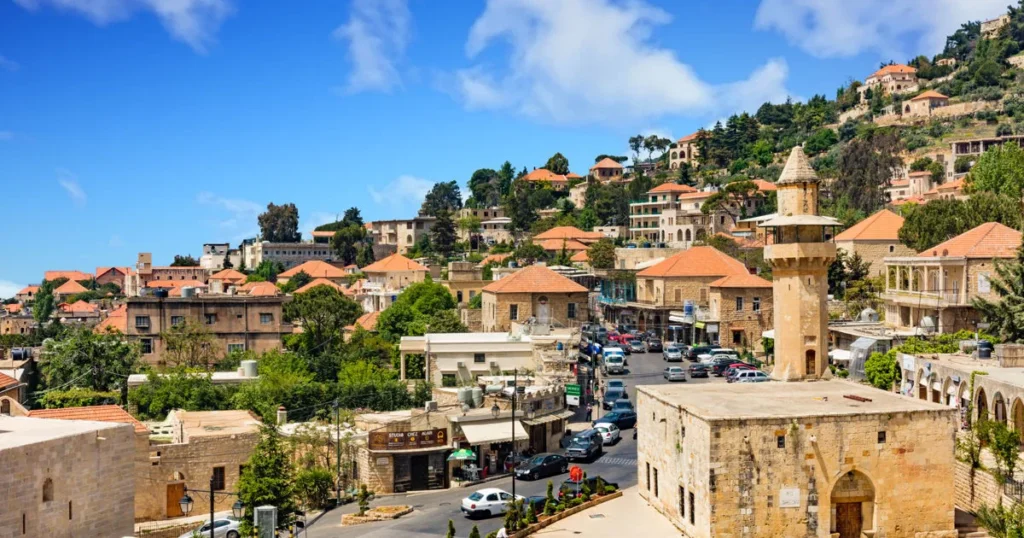
Deir El Qamar is one of Lebanon’s most beautiful historical towns and was once the capital of Mount Lebanon. Located in the Chouf region, the town is famous for its preserved stone architecture, historic churches, traditional squares, and cultural landmarks.
The town gained prominence during the sixteenth and seventeenth centuries under the rule of the Ma’an and Shihab dynasties. As the political center of Mount Lebanon, it became a thriving hub of administration, commerce, and culture.
Visitors today can stroll through charming cobblestone streets, admire traditional Lebanese houses, visit historic religious sites, and explore beautifully preserved public squares. The town remains one of the finest examples of Lebanon’s architectural and cultural heritage.
15. Qadisha Valley

Overview and History
Qadisha Valley is one of the most important cultural and natural landscapes in the Middle East and a UNESCO World Heritage Site. Known as the Holy Valley, it is famous for its dramatic cliffs, caves, rivers, forests, and ancient monasteries.
For over a thousand years, monks and hermits sought refuge in the valley’s secluded caves and cliffs. Numerous monasteries were established within the valley, transforming it into a major center of Christian spirituality and religious learning.
Visitors can hike through spectacular landscapes while discovering historic monasteries, chapels, and cave dwellings hidden among towering rock formations. The valley remains one of Lebanon’s most sacred and breathtaking destinations.
16. Cedars of God

Overview and History
Cedars of God is one of Lebanon’s most treasured natural landmarks and a UNESCO World Heritage Site. The forest contains some of the oldest cedar trees in the world, many of which are believed to be hundreds or even thousands of years old.
The cedar tree has been a symbol of Lebanon for millennia and appears prominently on the national flag. Ancient civilizations including the Phoenicians, Egyptians, Assyrians, Babylonians, and Romans prized cedar wood for shipbuilding, temples, and palaces.
Today, visitors can walk among majestic trees, explore scenic trails, and experience one of the country’s most iconic natural attractions.
17. Baatara Gorge Waterfall

Overview and History
Baatara Gorge Waterfall is one of Lebanon’s most spectacular natural wonders. The waterfall plunges more than 250 meters into a limestone sinkhole known as the Three Bridge Chasm.
During spring, melting snow from the surrounding mountains creates a powerful cascade that flows through three naturally formed limestone bridges before disappearing into the depths of the gorge.
The geological formations surrounding the waterfall developed over millions of years through erosion and tectonic activity. Today, the site attracts photographers, hikers, and nature enthusiasts from around the world.
18. Tannourine Cedar Forest

Overview and History
Tannourine Cedar Forest Nature Reserve is one of the largest cedar reserves in Lebanon and an important center for biodiversity and environmental conservation.
The reserve contains thousands of cedar trees along with diverse wildlife, rare plants, and scenic hiking trails. The forest provides visitors with opportunities for nature exploration, birdwatching, photography, and outdoor recreation.
Historically, the cedar forests of Lebanon supplied timber to some of the world’s greatest civilizations. Today, conservation efforts help preserve this invaluable natural heritage for future generations.
19. Anjar Ruins

Overview and History
Anjar Archaeological Site is one of the most important examples of early Islamic urban planning and a UNESCO World Heritage Site.
Founded during the eighth century by the Umayyad Caliph Al-Walid I, Anjar was designed as a royal city and commercial center. Unlike many ancient settlements that evolved gradually, Anjar was built according to a carefully planned layout featuring wide streets, palaces, markets, and defensive walls.
The site combines Roman, Byzantine, and Islamic architectural influences, making it unique among archaeological destinations. Visitors can explore ancient palaces, colonnaded streets, city gates, and residential quarters while learning about the early Islamic period.
20. Mzaar Kfardebian

Overview and History
Mzaar Kfardebian is Lebanon’s largest and most famous mountain resort destination. Located high in the Mount Lebanon range, the area is renowned for winter sports, alpine scenery, and outdoor adventure activities.
The resort features extensive ski slopes, snowboarding facilities, mountain trails, hotels, and recreational services. During winter, visitors enjoy skiing and snow sports, while summer brings hiking, cycling, and scenic mountain excursions.
The region has been inhabited for centuries and was historically connected to mountain communities that relied on agriculture and trade. Today, Mzaar Kfardebian stands as one of the leading tourism destinations in the Middle East, attracting visitors seeking both adventure and spectacular natural beauty.
21. Faraya

Overview and History
Faraya is one of Lebanon’s most famous mountain destinations, located in the Keserwan District of Mount Lebanon. Surrounded by breathtaking peaks, forests, valleys, and alpine landscapes, Faraya is renowned for its year-round tourism appeal and serves as a gateway to some of the country’s most spectacular natural attractions.
The town gained international recognition due to its proximity to the famous Mzaar ski resort, making it a premier destination for winter sports enthusiasts. During the summer months, Faraya transforms into a peaceful retreat where visitors can enjoy hiking, mountain biking, nature walks, and panoramic views of the surrounding countryside.
Historically, Faraya developed as a mountain community dependent on agriculture and trade. Over time, tourism became the primary economic activity, transforming the town into one of Lebanon’s most popular vacation destinations. Today, visitors are drawn by its fresh mountain air, beautiful scenery, luxury accommodations, and outdoor adventure opportunities.
The combination of traditional Lebanese mountain culture and modern tourism infrastructure makes Faraya one of the country’s most attractive destinations for both local and international travelers.
22. Aaqoura Lakes

Overview and History
Aaqoura Lakes are among Lebanon’s hidden natural treasures. Located in the mountainous region of Jbeil District, these beautiful seasonal lakes are surrounded by dramatic cliffs, lush meadows, forests, and breathtaking landscapes that attract nature lovers and adventure seekers.
The lakes are formed primarily by snowmelt and underground water sources flowing through the mountainous terrain. During spring and early summer, the area becomes particularly spectacular as water levels rise and wildflowers bloom across the surrounding valleys.
Historically, the Aaqoura region has been known for its fertile lands, abundant water resources, and traditional agricultural activities. Local communities have relied on the area’s natural resources for centuries, while the lakes themselves have become increasingly popular among hikers, photographers, and eco-tourists.
Visitors can enjoy hiking, picnicking, camping, photography, and wildlife observation while experiencing one of Lebanon’s most pristine natural environments. The peaceful atmosphere and stunning scenery make Aaqoura Lakes a perfect escape from urban life.
23. Raouche Corniche

Overview and History
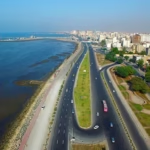
Raouche Corniche is one of the most iconic waterfront promenades in Lebanon and a symbol of Beirut’s vibrant coastal lifestyle. Stretching along the Mediterranean shoreline, the Corniche offers spectacular views of the sea, dramatic cliffs, and the famous Pigeon Rocks.
For decades, the Corniche has served as a gathering place for residents and visitors who come to walk, jog, cycle, relax, and enjoy the refreshing sea breeze. The promenade is lined with cafés, restaurants, hotels, and observation points that provide stunning views of the coastline.
The area surrounding Raouche has long been an important part of Beirut’s urban development. Throughout the twentieth century, it evolved into one of the city’s most prestigious districts while maintaining its role as a public recreational space.
Today, Raouche Corniche remains one of Beirut’s most beloved attractions. Sunset views from the promenade are particularly famous, attracting photographers and travelers from around the world who wish to experience the beauty of Lebanon’s capital city.
24. Tripoli Citadel

Overview and History
Tripoli Citadel, also known as the Citadel of Saint Gilles, is one of the largest and most important medieval fortresses in Lebanon. Overlooking the historic city of Tripoli, the fortress occupies a strategic hilltop location that has been used for defense and administration for centuries.
The original fortress was established during the Crusader period in the twelfth century and later expanded by Mamluk and Ottoman rulers. Throughout its long history, the citadel played a crucial role in protecting northern Lebanon and controlling important trade routes connecting coastal and inland regions.
Visitors can explore massive stone walls, defensive towers, underground chambers, courtyards, and observation platforms offering panoramic views of Tripoli and the Mediterranean coastline. The fortress contains architectural elements from multiple historical periods, reflecting the diverse civilizations that shaped the region.
Today, the citadel stands as one of Lebanon’s most impressive historical monuments and provides valuable insight into the military, political, and cultural history of the country.
25. Palm Islands Nature Reserve

Overview and History
Palm Islands Nature Reserve is one of Lebanon’s most important protected natural areas and a designated marine reserve located off the coast of Tripoli. The reserve consists of three small Mediterranean islands that provide vital habitats for numerous plant and animal species.
The islands are particularly important for migratory birds, endangered sea turtles, and marine ecosystems. Due to their ecological significance, the islands have received national and international recognition as protected conservation areas.
Historically, the islands were used by fishermen and sailors navigating the Mediterranean Sea. Archaeological evidence also suggests human activity in the area dating back centuries. Today, strict environmental protections help preserve the islands’ biodiversity and natural beauty.
Visitors can enjoy boat excursions, wildlife observation, birdwatching, swimming, and eco-tourism activities while experiencing one of Lebanon’s most unique coastal environments. The reserve offers a rare opportunity to explore untouched Mediterranean landscapes and appreciate the country’s rich natural heritage.
Related artical : Best place to visit in Miziara