Now Reading: Best place to visit in Ban Houayxay
-
01
Best place to visit in Ban Houayxay
Best place to visit in Ban Houayxay

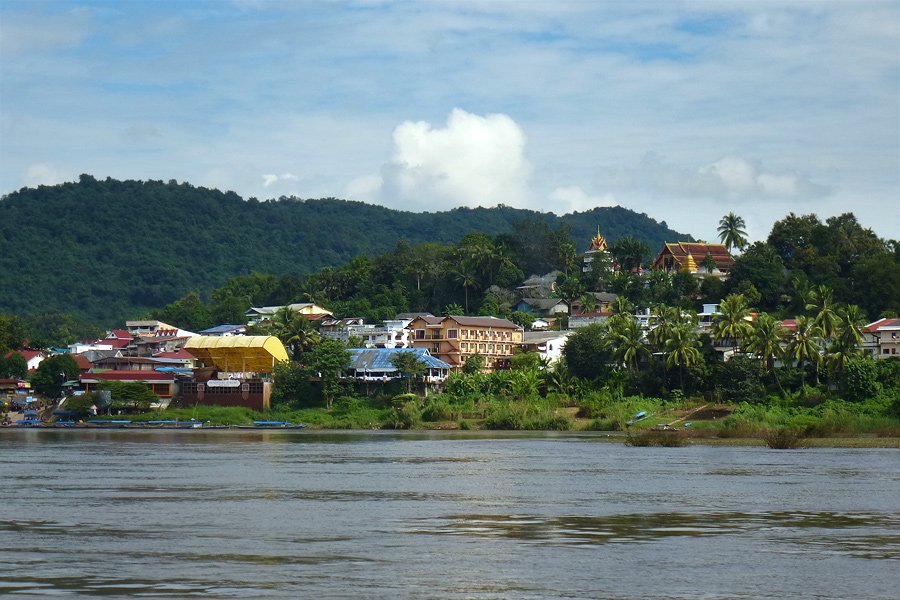
Ban Houayxay (commonly known as Houayxay) is the capital of Bokeo Province and one of the most important gateway towns in northern Laos. Situated on the banks of the Mekong River directly opposite Chiang Khong in Thailand, Houayxay has long served as a center of trade, transportation, and cultural exchange between Laos, Thailand, China, and Myanmar.
For centuries, traders, travelers, and merchants passed through this strategic location while moving goods along the Mekong River and ancient regional trade routes. Today, Houayxay is famous as the starting point for Mekong River cruises, eco-tourism adventures, and visits to some of the most spectacular natural attractions in northern Laos.
With its rich history, scenic river landscapes, Buddhist temples, mountain forests, and multicultural atmosphere, Houayxay offers visitors an authentic introduction to northern Laos.
The following attractions represent the best places to visit in Ban Houayxay.
1. Gibbon Experience – The World-Famous Jungle Adventure
History
The Gibbon Experience was established to promote forest conservation and protect wildlife habitats within the forests of Bokeo Province.
The project gained international recognition for combining eco-tourism with environmental protection. Revenue generated from tourism helps support conservation efforts and local communities.
The experience takes place in one of Laos’ most important forest ecosystems, home to rare wildlife including black-crested gibbons.
Visitor Experience
Visitors can enjoy:
- Giant jungle ziplines
- Treehouse accommodation
- Rainforest trekking
- Wildlife observation
- Conservation education
The Gibbon Experience remains one of Laos’ most unique tourism attractions.
2. Mekong River – The Lifeline of Houayxay

History
The Mekong River has shaped the history of Houayxay for centuries.
Ancient trade routes followed the river, allowing merchants to transport goods between kingdoms throughout Southeast Asia. The river also connected local communities and supported agriculture, fishing, and commerce.
Today, the Mekong continues to serve as an important transportation corridor and cultural landmark.
Visitor Experience
Visitors can enjoy:
- Riverside walks
- Sunset photography
- Boat cruises
- Scenic river views
- Local cultural experiences
The Mekong remains the heart of life in Houayxay.
3. Fort Carnot – The Colonial-Era Fortress

History
Fort Carnot was constructed during the French colonial period as a military outpost overlooking the Mekong River.
The fort served strategic purposes by monitoring river traffic and protecting colonial interests in the region.
Although partially ruined today, it remains one of Houayxay’s most important historical landmarks.
Visitor Experience
Visitors can explore:
- Historic ruins
- Colonial heritage
- River panoramas
- Photography opportunities
- Historical viewpoints
The fort offers insight into the colonial history of northern Laos.
4. Wat Chomkao Manilat – The Sacred Temple Above the Town

History
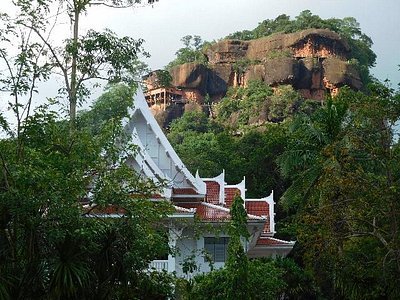
Wat Chomkao Manilat is one of the most important Buddhist temples in Houayxay.
For generations, the monastery has served as a spiritual center where monks study Buddhist teachings and local communities gather for religious ceremonies.
The temple reflects the enduring influence of Buddhism in Lao society.
Visitor Experience
Visitors can admire:
- Traditional temple architecture
- Sacred Buddha images
- Religious artwork
- Peaceful surroundings
- Cultural traditions
The temple provides both spiritual and cultural insight.
5. Bokeo Nature Reserve – A Protected Wilderness

History
Bokeo’s forests have supported local communities for centuries and provide habitat for many rare species.
The reserve was established to protect biodiversity and prevent habitat loss.
Conservation efforts have helped preserve some of the most important rainforest ecosystems in northern Laos.
Visitor Experience
Visitors can discover:
- Tropical forests
- Wildlife habitats
- Nature trails
- Birdwatching opportunities
- Eco-tourism activities
The reserve is a paradise for nature lovers.
6. Houayxay Morning Market – The Cultural Heart of the Town

History
Markets have long served as the center of trade and social interaction in Houayxay.
Farmers, fishermen, and merchants from nearby villages bring their goods to market, continuing traditions that have existed for generations.
Visitor Experience
Visitors can browse:
- Fresh produce
- Traditional foods
- Local textiles
- Handicrafts
- Everyday products
The market provides a glimpse into daily life in northern Laos.
7. Friendship Bridge IV – Connecting Laos and Thailand

History
The Fourth Thai-Lao Friendship Bridge opened in 2013 and significantly strengthened trade and tourism between Laos and Thailand.
The bridge forms part of the Asian Highway Network connecting Southeast Asia and southern China.
Its construction transformed Houayxay into an even more important transportation hub.
Visitor Experience
Visitors can admire:
- Modern engineering
- Mekong River views
- International connectivity
- Scenic landscapes
- Photography opportunities
The bridge symbolizes regional cooperation and development.
8. Traditional Ethnic Villages – Preserving Cultural Diversity

History
Bokeo Province is home to several ethnic communities, including the Hmong, Akha, Yao, Tai Lue, and Khmu peoples.
These groups have preserved their unique traditions, languages, and lifestyles for centuries.
Their cultural heritage contributes greatly to the region’s identity.
Visitor Experience
Visitors can experience:
- Traditional houses
- Cultural ceremonies
- Handicraft production
- Local customs
- Community life
The villages provide valuable cultural insight.
9. Mekong River Cruise Departure Point – Gateway to Luang Prabang
History
For centuries, the Mekong River served as the primary transportation route through northern Laos.
Long before modern roads existed, travelers depended on river boats to reach remote communities.
Today, Houayxay remains the main departure point for the famous Mekong slow boat journey to Luang Prabang.
Visitor Experience
Visitors can enjoy:
- Scenic river journeys
- Mountain landscapes
- Riverside villages
- Cultural encounters
- Historic travel routes
The cruise offers one of Southeast Asia’s most memorable travel experiences.
10. Sunset Viewpoint Over the Mekong – The Best Panorama in Houayxay

History
For generations, local communities have gathered along the riverbanks to watch the sunset over the Mekong.
The changing light transforms the river into a spectacular landscape of gold and orange reflections.
This daily event remains one of the town’s most cherished traditions.
Visitor Experience
Visitors can enjoy:
- Sunset photography
- Panoramic river views
- Mountain silhouettes
- Peaceful surroundings
- Scenic landscapes
The viewpoint offers a perfect ending to a day in Houayxay.
Related artical :Best place to visit in Sayaboury