
Now Reading: Best place to visit in Bremen
-
01
Best place to visit in Bremen
Best place to visit in Bremen
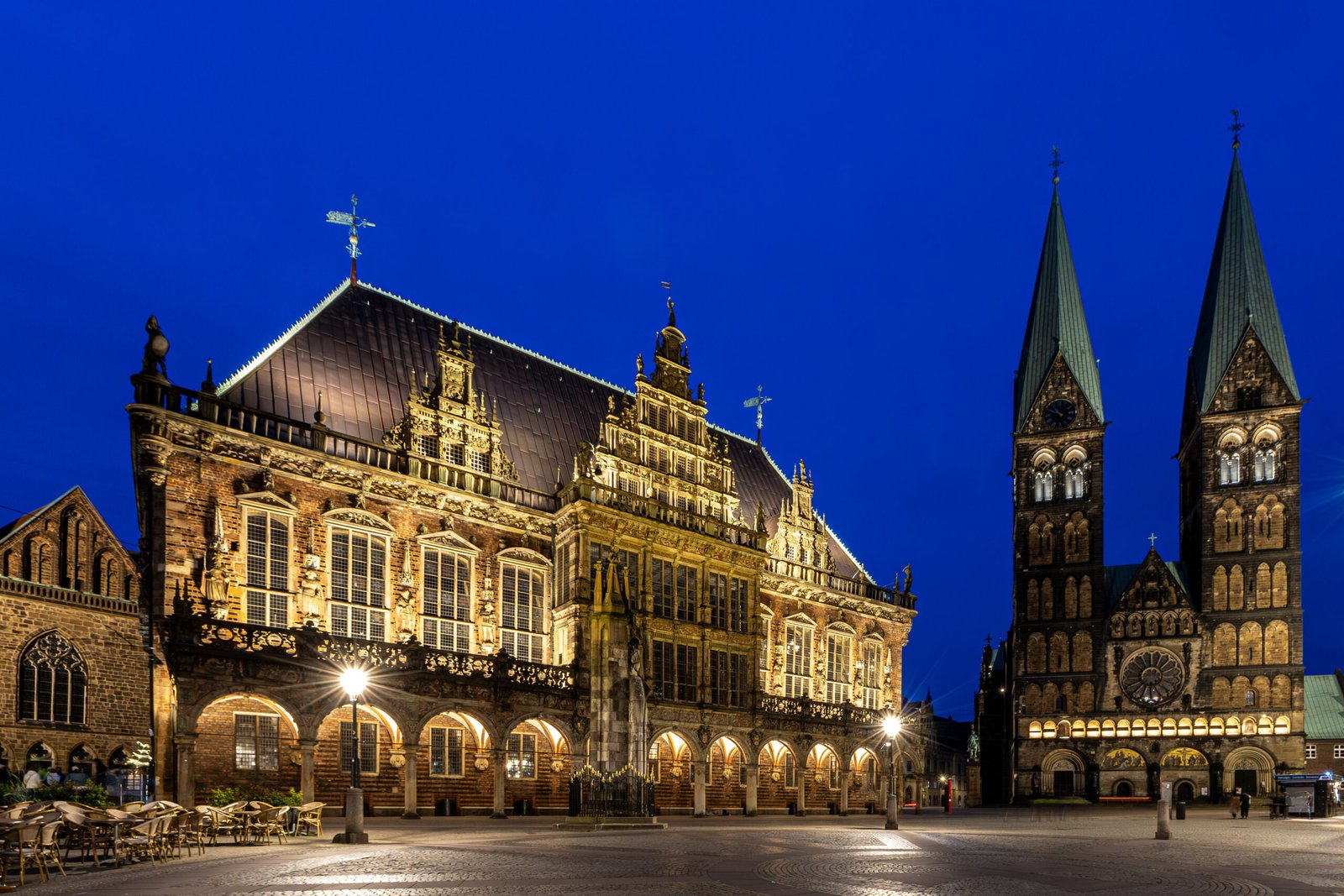
🏛️ 1. Bremen Town Hall & Market Square – UNESCO World Heritage Beauty

The Bremen Town Hall is the city’s most famous landmark and one of the most important Gothic and Renaissance buildings in Europe. Located in the heart of Bremen’s historic Market Square, the Town Hall was built over 600 years ago and later became a UNESCO World Heritage Site because of its architectural and historical significance.
The magnificent facade features statues, arches, decorative carvings, and elegant Renaissance details that reflect Bremen’s wealth and independence during the Hanseatic era.
Inside the building, visitors can explore grand halls, historical chambers, and impressive interiors that continue to serve as Bremen’s government headquarters today.
The Market Square surrounding the Town Hall is one of Germany’s most beautiful public squares. Historic buildings, cafes, restaurants, and street performers create a lively and welcoming atmosphere throughout the year.
During Christmas season, the square transforms into one of Germany’s most magical Christmas markets filled with lights, wooden stalls, music, and festive decorations.
The Town Hall and Market Square perfectly represent Bremen’s historical importance and cultural elegance.
🗿 2. Roland Statue – Symbol of Freedom & Independence

Standing proudly beside the Town Hall is the famous Roland Statue, one of Bremen’s most important historical symbols. Built in 1404, the statue represents freedom, justice, and the independence of the city.
The stone figure of Roland holds a sword and shield and stands over 10 meters tall. Throughout history, the statue symbolized Bremen’s rights as a free imperial trading city.
Local legends say that Bremen will remain independent as long as the Roland Statue stands safely in the Market Square.
The monument is also recognized as part of Bremen’s UNESCO World Heritage status and attracts visitors from around the world who admire its medieval craftsmanship and historical significance.
Photographers especially enjoy capturing the statue with the beautiful Town Hall in the background.
The Roland Statue remains one of Bremen’s proudest cultural landmarks.
🏘️ 3. Schnoor Quarter – Bremen’s Fairy-Tale Neighborhood

The Schnoor Quarter is Bremen’s oldest neighborhood and one of the city’s most magical places to visit. This medieval district consists of narrow winding streets, colorful tiny houses, art galleries, cafes, boutiques, and historic buildings dating back to the 15th and 16th centuries.
Walking through Schnoor feels like entering a fairy tale. Cobblestone alleys, flower-covered facades, antique shops, and hidden courtyards create a romantic atmosphere unlike anywhere else in Germany.
The district originally housed fishermen, sailors, and craftsmen connected to Bremen’s maritime trade economy. Today, it has become one of the city’s most popular tourist destinations while still preserving its authentic medieval charm.
Visitors can explore local craft stores, traditional bakeries, souvenir shops, museums, and cozy restaurants serving northern German specialties.
At night, warm lantern lights make the Schnoor Quarter even more enchanting.
This district perfectly captures the historical soul of Bremen.
🎶 4. Bremen Town Musicians Statue – Famous Brothers Grimm Fairy Tale

One of Bremen’s most beloved attractions is the famous Bremen Town Musicians Statue inspired by the Brothers Grimm fairy tale.
The bronze statue features four animals standing on top of each other — a donkey, dog, cat, and rooster — symbolizing friendship, courage, and hope.
According to local tradition, touching the donkey’s legs while making a wish brings good luck. Because of this belief, the donkey’s legs appear shiny from millions of visitors touching them over the years.
The fairy tale tells the story of animals traveling to Bremen to become musicians after escaping difficult lives.
The statue has become one of Bremen’s most photographed attractions and an important symbol of the city’s cultural identity.
Children and families especially enjoy discovering this magical fairy-tale landmark.
⛪ 5. Bremen Cathedral (St. Peter’s Cathedral)

St. Peter’s Cathedral is one of Bremen’s oldest and most magnificent religious landmarks. The cathedral dates back over 1,200 years and combines Romanesque and Gothic architectural styles.
The impressive twin towers dominate the city skyline and can be climbed for breathtaking panoramic views across Bremen’s rooftops, rivers, and historic center.
Inside, visitors can admire beautiful stained-glass windows, ancient crypts, historical altars, sculptures, and peaceful prayer spaces.
The cathedral also contains a fascinating museum displaying religious artifacts and archaeological discoveries connected to Bremen’s long spiritual history.
Concerts and organ performances frequently take place inside the cathedral because of its excellent acoustics and musical traditions.
St. Peter’s Cathedral remains one of the most important cultural and spiritual sites in Bremen.
⚓ 6. Schlachte Promenade – Riverside Dining & Harbor Atmosphere
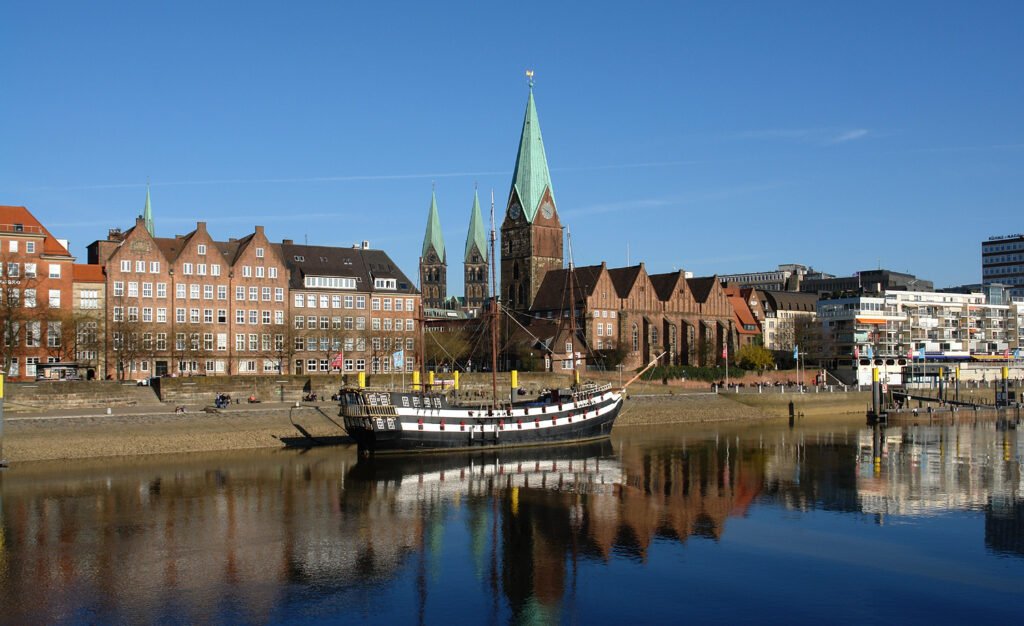
The Schlachte Promenade is Bremen’s lively riverside district located along the River Weser. Historically used as a harbor area for merchants and ships, the promenade has transformed into one of the city’s most popular entertainment and dining locations.
Visitors can walk beside the river while enjoying views of boats, historic ships, cafes, restaurants, and colorful waterfront buildings.
The area becomes especially lively during evenings when outdoor restaurants and beer gardens fill with locals and tourists enjoying food and drinks beside the water.
Boat cruises and river tours also depart from the promenade, allowing travelers to explore Bremen from the Weser River.
Seasonal festivals and markets frequently take place along the waterfront, adding energy and cultural life to the district.
The Schlachte perfectly combines Bremen’s maritime heritage with modern leisure and nightlife.
🖼️ 7. Kunsthalle Bremen – World-Class Art Museum

The Kunsthalle Bremen is one of Germany’s finest art museums and contains an impressive collection of European paintings, sculptures, and modern artworks.
The museum features masterpieces from famous artists including Rembrandt, Monet, Van Gogh, and many others spanning centuries of artistic history.
Visitors can explore exhibitions ranging from medieval religious art to modern contemporary installations.
The elegant museum building and peaceful galleries create a sophisticated cultural experience for art lovers and travelers interested in European creativity.
Temporary exhibitions and educational programs continue to make the Kunsthalle an important artistic center in northern Germany.
🌳 8. Bürgerpark – Bremen’s Green Oasis

Bürgerpark is one of Germany’s most beautiful urban parks and provides a peaceful escape from city life.
The park contains lakes, forests, walking paths, gardens, picnic areas, playgrounds, and open green landscapes perfect for relaxation and outdoor recreation.
Visitors enjoy boating, cycling, jogging, horse carriage rides, and peaceful walks throughout the park.
During spring and summer, blooming flowers and lush greenery create especially beautiful scenery.
The park is popular among families, photographers, and nature lovers seeking calm surroundings within the city.
Bürgerpark perfectly balances Bremen’s historical urban atmosphere with natural beauty.
🚢 9. Universum Bremen – Science & Interactive Discovery

Universum Bremen is one of Germany’s most exciting interactive science museums. The futuristic silver building itself resembles a giant whale or spaceship and immediately attracts attention.
Inside, visitors can participate in hundreds of hands-on experiments and exhibits related to science, technology, nature, and human life.
The museum is especially popular among children and families because it combines education with entertainment and creativity.
Interactive displays allow visitors to explore topics such as space, weather, energy, engineering, and the human body through practical experiences.
Universum Bremen demonstrates the city’s modern and innovative side beyond its historical attractions.
Related artical : Best place to visit in Hamburg