Now Reading: Best place to visit in Jelgava
-
01
Best place to visit in Jelgava
Best place to visit in Jelgava

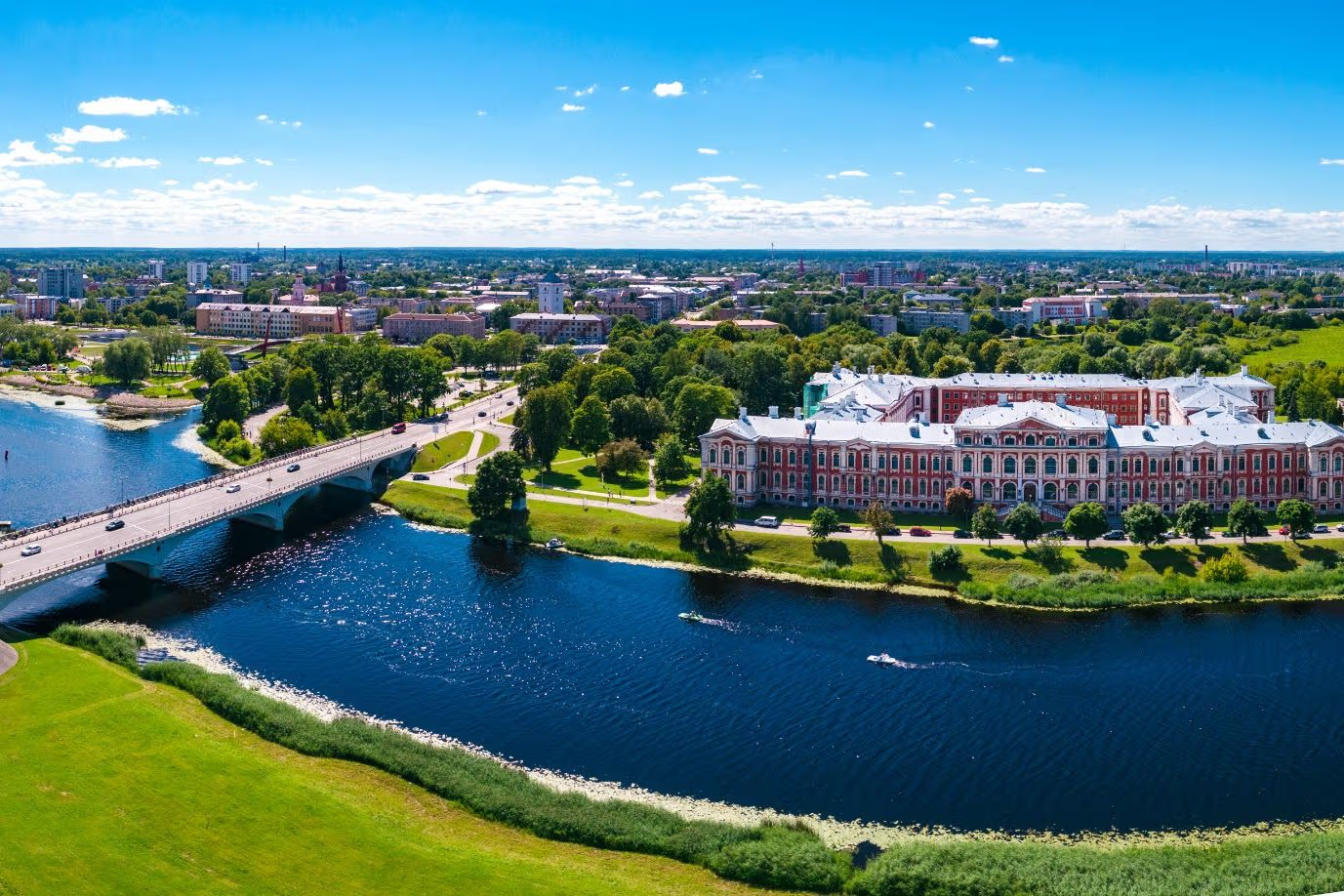
Jelgava is one of Latvia’s most historically important cities and the largest urban center in the Zemgale region. Located approximately 40 kilometers southwest of Riga, Jelgava sits between the Lielupe and Driksa rivers and has played a vital role in Latvian history for centuries.
Originally established as a settlement of the Semigallians, one of the ancient Baltic tribes, Jelgava later became the capital of the Duchy of Courland and Semigallia, one of the most prosperous states in Northern Europe during the seventeenth and eighteenth centuries. The city flourished as a center of trade, culture, politics, and education, attracting architects, artists, merchants, and nobles from across Europe.
Although much of the city was damaged during World War II, extensive reconstruction preserved many important landmarks and allowed Jelgava to remain a significant cultural and educational center. Today, visitors discover a city rich in history, beautiful architecture, river landscapes, museums, and cultural attractions.
The following attractions represent the best places to visit in Jelgava.
1. Jelgava Palace – The Grand Residence of the Dukes

History
Jelgava Palace is the largest Baroque-style palace in the Baltic States and the most famous landmark in the city.
Designed by the renowned Italian architect Bartolomeo Rastrelli, who also designed the Winter Palace in Saint Petersburg, construction began in the eighteenth century for the Dukes of Courland and Semigallia.
The palace served as the political and cultural center of the duchy and hosted important European dignitaries throughout its history.
Despite suffering damage during wars and political upheavals, the palace has been carefully restored and remains one of Latvia’s most important architectural treasures.
Visitor Experience
Visitors can explore:
- Magnificent Baroque architecture
- Historic palace interiors
- Ducal tombs
- Museum exhibitions
- Scenic courtyards
- Cultural events
The palace offers a fascinating journey into Latvia’s aristocratic past.
2. Jelgava Holy Trinity Church Tower – The Best View in the City

History
The original Holy Trinity Church was built in the sixteenth century and became one of Jelgava’s most important religious landmarks.
Although much of the church was destroyed during World War II, the tower survived and was later restored as a cultural and historical center.
Today, it serves as both a museum and observation tower.
Visitor Experience
Visitors can enjoy:
- Panoramic city views
- Historical exhibitions
- Interactive displays
- Photography opportunities
- Educational experiences
The tower provides the finest views of Jelgava and its surrounding rivers.
3. Academia Petrina – Latvia’s First Higher Education Institution

History
Founded in 1775, Academia Petrina became the first institution of higher education in present-day Latvia.
Established by Duke Peter von Biron, the academy attracted scholars and intellectuals from across Europe.
Today, the historic building houses the Jelgava History and Art Museum.
Visitor Experience
Visitors can discover:
- Historical exhibits
- Educational heritage
- Art collections
- Classical architecture
- Cultural programs
The site highlights Jelgava’s importance as a center of learning.
4. Driksa River Promenade – The Waterfront of the City

History
The rivers of Jelgava played a central role in the city’s development for centuries.
Trade, transportation, and agriculture depended heavily on these waterways, helping transform Jelgava into an important regional center.
The modern promenade celebrates this historical connection.
Visitor Experience
Visitors can enjoy:
- Riverside walks
- Scenic views
- Cafes and restaurants
- Photography opportunities
- Relaxing atmosphere
The promenade is one of the city’s most popular recreational areas.
5. St. Simeon and St. Anna Orthodox Cathedral – A Religious Landmark

History
Built in the nineteenth century, the cathedral became an important center for the Orthodox Christian community.
Its elegant design and rich interior decorations reflect the religious and cultural diversity of Jelgava throughout history.
The cathedral remains active today.
Visitor Experience
Visitors can admire:
- Religious artwork
- Historic architecture
- Sacred interiors
- Cultural heritage
- Spiritual atmosphere
The cathedral is one of Jelgava’s most beautiful religious landmarks.
6. Jelgava History and Art Museum – Preserving the City’s Story

History
The museum preserves centuries of local history and cultural heritage.
Its collections include archaeological discoveries, historical documents, artworks, and exhibits covering the development of Jelgava from ancient times to the modern era.
The museum serves as an important cultural institution.
Visitor Experience
Visitors can learn about:
- Local history
- Art collections
- Archaeological finds
- Cultural traditions
- Historical events
The museum offers a deeper understanding of the city.
7. Lielupe Floodplain Meadows – A Natural Paradise

History
The floodplain meadows surrounding Jelgava have supported wildlife and agriculture for centuries.
These unique ecosystems are among the largest protected floodplain habitats in Europe and play a crucial role in biodiversity conservation.
Today, they are famous for their wild horses and grazing cattle.
Visitor Experience
Visitors can enjoy:
- Wildlife observation
- Nature photography
- Walking trails
- Scenic landscapes
- Birdwatching opportunities
The meadows provide a peaceful escape into nature.
8. Jelgava Promenade – The Modern Face of the City

History
As Jelgava modernized, significant efforts were made to revitalize public spaces and improve urban life.
The promenade became a symbol of the city’s renewal and commitment to preserving its relationship with the rivers.
Today, it hosts cultural events and community activities throughout the year.
Visitor Experience
Visitors can enjoy:
- Public art installations
- River scenery
- Walking routes
- Seasonal festivals
- Evening illumination
The promenade reflects contemporary Jelgava.
9. Firefighting Museum – A Unique Historical Attraction

History
The museum was established to preserve the history of firefighting and emergency services in Latvia.
Its exhibits document the evolution of firefighting equipment, technology, and public safety efforts throughout the centuries.
The museum offers a unique perspective on everyday history.
Visitor Experience
Visitors can explore:
- Historic fire engines
- Rescue equipment
- Interactive exhibits
- Educational displays
- Historical collections
The museum appeals to visitors of all ages.
10. Pasta Island – The City’s Cultural and Recreation Hub

History
Located between the rivers of Jelgava, Pasta Island was transformed into a modern recreational and cultural venue.
The area became famous for hosting major festivals, concerts, sports events, and community celebrations.
Today, it serves as one of the city’s most vibrant public spaces.
Visitor Experience
Visitors can enjoy:
- Outdoor events
- River landscapes
- Recreational activities
- Family attractions
- Cultural festivals
The island is a lively destination throughout the year.
Related artical : Best place to visit in Liepāja