
Now Reading: Best place to visit in Kyoto
-
01
Best place to visit in Kyoto
Best place to visit in Kyoto
Kyoto is one of the most historically significant and culturally rich cities in the world. Serving as Japan’s capital for more than 1,000 years from 794 to 1868, Kyoto remains the spiritual and cultural heart of the nation. Nestled among mountains in the Kansai region, the city is home to thousands of temples, shrines, gardens, palaces, and traditional wooden neighborhoods that preserve the essence of old Japan.
Unlike many Japanese cities that experienced extensive modernization, Kyoto retained much of its historical character. The city escaped large-scale destruction during World War II, allowing countless historic structures to survive. Today, Kyoto boasts 17 UNESCO World Heritage Sites and attracts millions of visitors annually who come to experience its remarkable heritage, traditional arts, seasonal beauty, and spiritual atmosphere.
Kyoto is often described as the soul of Japan. Here, ancient Buddhist temples stand beside tranquil gardens, geishas walk through centuries-old streets, and centuries-old traditions continue to shape everyday life. Whether visiting during cherry blossom season, autumn foliage, or the snowy winter months, Kyoto offers unforgettable experiences that reveal Japan’s timeless beauty.
1. Fushimi Inari Taisha – Kyoto’s Most Iconic Shrine

Among Kyoto’s most famous attractions is Fushimi Inari Taisha, a spectacular Shinto shrine dedicated to Inari, the deity of rice, prosperity, and business success.
Founded in the eighth century, the shrine is best known for its thousands of vibrant red torii gates that form winding pathways up Mount Inari. These gates, donated by individuals and businesses seeking blessings, create one of the most recognizable landscapes in Japan.
Visitors can hike through forested trails while passing shrines, stone fox statues, and scenic viewpoints overlooking Kyoto. The atmosphere becomes increasingly peaceful as one ascends higher into the mountain.
Fushimi Inari Taisha is not only a place of worship but also one of Japan’s most photographed and celebrated landmarks.
2. Kinkaku-ji – The Golden Pavilion

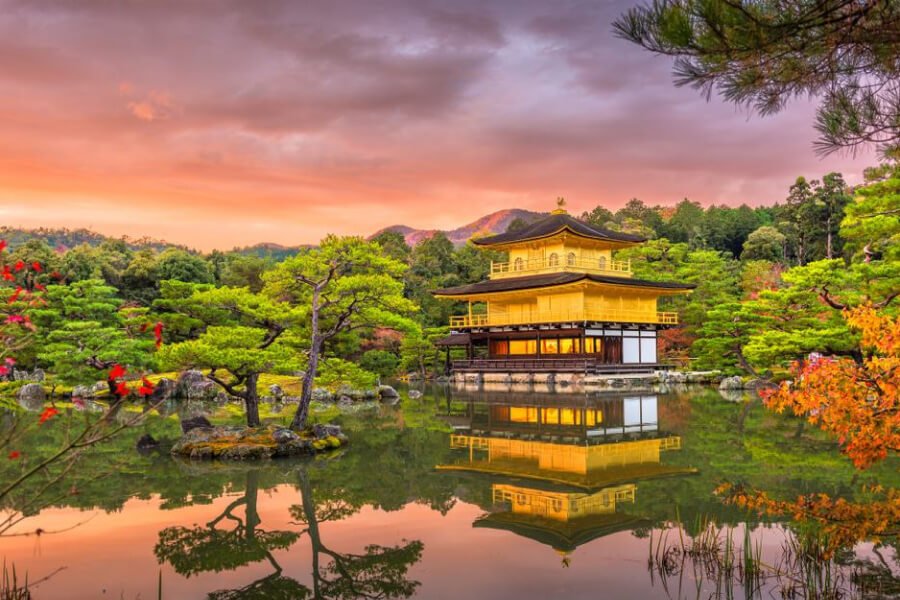
One of Japan’s most breathtaking landmarks, Kinkaku-ji, commonly known as the Golden Pavilion, is a masterpiece of architecture and landscape design.
Originally built in the late fourteenth century as a retirement villa for a shogun, the structure was later converted into a Zen Buddhist temple. Its upper floors are covered entirely in gold leaf, creating a dazzling reflection in the surrounding pond.
The carefully designed gardens surrounding the pavilion reflect principles of harmony, balance, and natural beauty central to Japanese aesthetics.
Visitors from around the world come to admire the pavilion’s elegance and the stunning seasonal scenery that surrounds it throughout the year.
3. Kiyomizu-dera – The Temple of Pure Water

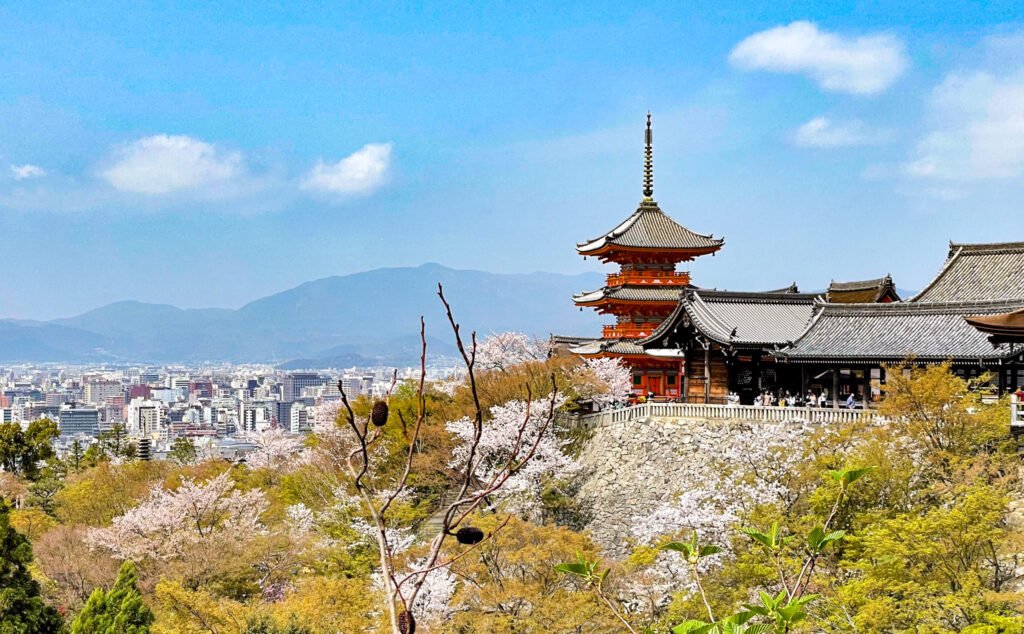
Founded in 778, Kiyomizu-dera is one of Kyoto’s oldest and most important Buddhist temples.
The temple is famous for its massive wooden stage that extends from the main hall and offers spectacular views of Kyoto. Remarkably, the structure was constructed without using a single nail.
The temple’s name means “Pure Water Temple” and comes from the nearby Otowa Waterfall, whose waters are believed to bring health, success, and longevity.
Surrounded by cherry blossoms in spring and colorful foliage in autumn, Kiyomizu-dera remains one of Japan’s most visited religious sites and a symbol of Kyoto’s spiritual heritage.
4. Arashiyama Bamboo Grove – Kyoto’s Natural Wonder

The enchanting Arashiyama Bamboo Grove offers one of the most magical walking experiences in Japan.
Towering bamboo stalks rise high above visitors, creating a natural tunnel filled with gentle rustling sounds and filtered sunlight. The grove has become one of Kyoto’s most famous attractions and represents the harmony between nature and traditional Japanese aesthetics.
The surrounding Arashiyama district also features temples, gardens, traditional shops, and the historic Togetsukyo Bridge.
The Bamboo Grove remains one of the most iconic natural landscapes in all of Japan.
5. Gion – The Historic Geisha District

The historic Gion district represents Kyoto’s most famous traditional neighborhood.
Known for its preserved wooden buildings, tea houses, and cultural heritage, Gion is one of the few places where visitors may encounter geishas and maikos (apprentice geishas) traveling between appointments.
The district developed around Yasaka Shrine and became a center for traditional entertainment and performing arts. Today, its narrow streets and lantern-lit alleys offer visitors a glimpse into Kyoto’s past.
Gion remains a living symbol of Japan’s traditional culture and artistic refinement.
6. Nijo Castle – The Power of the Shoguns

Built in 1603, Nijo Castle served as the Kyoto residence of the Tokugawa shoguns.
The castle complex features elaborate gates, beautiful gardens, and the famous Ninomaru Palace, known for its “nightingale floors” that chirp when walked upon to alert guards of intruders.
Richly decorated interiors showcase the wealth and authority of the Tokugawa government during Japan’s feudal era.
Today, Nijo Castle stands as one of Kyoto’s most important historical landmarks and a UNESCO World Heritage Site.
7. Kyoto Imperial Palace – Home of Japan’s Emperors

For more than a millennium, Kyoto Imperial Palace served as the residence of Japan’s Imperial Family.
Located within the spacious Kyoto Gyoen National Garden, the palace reflects traditional Japanese court architecture and imperial traditions. Although the emperor now resides in Tokyo, the palace remains an important symbol of Japan’s monarchy and cultural heritage.
Visitors can explore the surrounding gardens and participate in guided tours that reveal the history of imperial life.
The palace provides valuable insight into Kyoto’s role as Japan’s former capital.
8. Philosopher’s Path – Kyoto’s Most Peaceful Walk

The scenic Philosopher’s Path is one of the city’s most beloved walking routes.
Following a canal lined with hundreds of cherry trees, the path connects several temples and shrines while offering peaceful surroundings perfect for reflection and relaxation. The route is named after philosopher Nishida Kitaro, who reportedly used the path for daily meditation walks.
During cherry blossom season, the pathway transforms into one of Kyoto’s most beautiful landscapes.
Its serene atmosphere captures the contemplative spirit that defines much of Kyoto.
9. Nishiki Market – Kyoto’s Culinary Heart

Known as “Kyoto’s Kitchen,” Nishiki Market has served residents for centuries.
The market features more than a hundred shops and vendors selling fresh seafood, vegetables, traditional sweets, pickles, tea, and local delicacies. Visitors can sample authentic Kyoto cuisine while learning about the city’s culinary traditions.
The lively atmosphere and remarkable variety of foods make Nishiki Market a favorite destination for food enthusiasts.
It remains one of Kyoto’s most important cultural and gastronomic landmarks.
10. Ryoan-ji Temple – The Essence of Zen

The famous Ryoan-ji is home to Japan’s most celebrated Zen rock garden.
Created during the fifteenth century, the minimalist garden consists of carefully arranged rocks placed within a field of white gravel. Despite its simplicity, the design has inspired scholars, artists, and visitors for centuries.
The exact meaning of the garden remains open to interpretation, reflecting the principles of Zen Buddhism and encouraging contemplation.
Ryoan-ji represents the elegance, simplicity, and spiritual depth that define much of Kyoto’s cultural identity.
Kyoto is a city where Japan’s history, spirituality, art, and traditions remain alive in extraordinary ways. From the golden splendor of Kinkaku-ji and the endless torii gates of Fushimi Inari to the quiet beauty of Zen gardens and historic geisha districts, every corner of Kyoto tells a story spanning more than a thousand years. As Japan’s ancient capital and cultural heart, Kyoto offers visitors an unforgettable journey into the soul of the nation and remains one of the world’s most remarkable destinations.
Related artical : Best place to visit in Kobe