
Now Reading: Best place to visit in Beirut
-
01
Best place to visit in Beirut
Best place to visit in Beirut

Beirut is one of the oldest continuously inhabited cities in the world and the vibrant capital of Lebanon. Located on the Mediterranean coast, Beirut has served as a crossroads of civilizations for more than 5,000 years. Throughout its long history, the city has been influenced by the Phoenicians, Romans, Byzantines, Arabs, Ottomans, and French, creating a unique blend of cultures, architecture, and traditions.
Known as the “Paris of the Middle East,” Beirut is famous for its historical landmarks, seaside promenades, museums, lively neighborhoods, and world-class cuisine. The city combines ancient ruins with modern skyscrapers, offering visitors a fascinating journey through thousands of years of history.
The following attractions represent the best places to visit in Beirut.
1. Beirut Souks

The Beirut Souks form the commercial heart of the city and occupy a site that has served as a marketplace since ancient Phoenician times. Today, the area combines modern shopping centers with streets that follow the layout of historic trading routes.
Visitors can explore luxury boutiques, local shops, restaurants, and cultural spaces while experiencing the energy of modern Beirut. The district also contains archaeological remains that reveal layers of the city’s long history.
The Beirut Souks provide an excellent introduction to the city’s blend of tradition and modernity.
2. Pigeon Rocks

Pigeon Rocks, also known as Raouché Rocks, are among Beirut’s most recognizable natural landmarks. Rising dramatically from the Mediterranean Sea, these massive rock formations have become a symbol of the city.
For generations, locals and visitors have gathered along the waterfront to admire the spectacular scenery and sunsets. The surrounding promenade offers beautiful views of the coastline and remains one of Beirut’s most popular gathering places.
The site is especially breathtaking during sunset when the golden light illuminates the sea and rock formations.
3. National Museum of Beirut

The National Museum of Beirut is the most important archaeological museum in Lebanon and preserves thousands of years of history.
Its collections include Phoenician sculptures, Roman mosaics, ancient sarcophagi, Byzantine artifacts, and treasures from civilizations that flourished throughout the region. The museum provides visitors with a comprehensive understanding of Lebanon’s remarkable cultural heritage.
Despite suffering damage during periods of conflict, the museum was carefully restored and today stands as a symbol of cultural preservation and national pride.
4. Mohammad Al-Amin Mosque

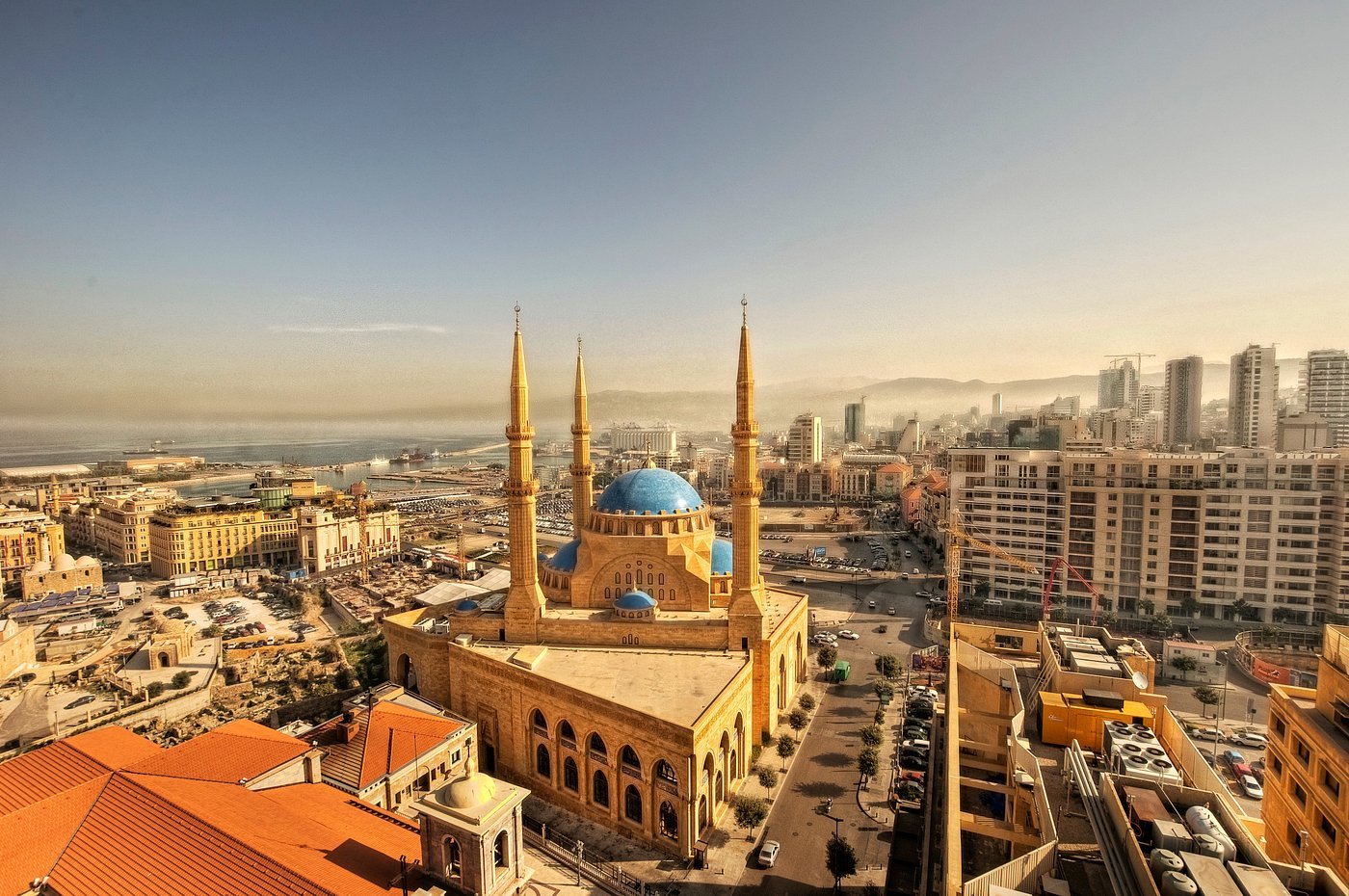
The Mohammad Al-Amin Mosque is one of the most impressive modern landmarks in Beirut. Known for its striking blue dome and elegant minarets, the mosque dominates the skyline of downtown Beirut.
Completed in the early twenty-first century, the mosque reflects both traditional Islamic architectural principles and contemporary design influences. Its grand interior, decorative details, and spiritual atmosphere attract visitors from around the world.
The mosque has become one of the city’s most photographed landmarks.
5. Martyrs’ Square

Martyrs’ Square occupies a central place in Beirut’s history and national identity. The square commemorates Lebanese nationalists who were executed during Ottoman rule and became symbols of independence and freedom.
Throughout modern history, the square served as a gathering place for political movements, public demonstrations, and national celebrations. Its significance extends far beyond its physical location, representing resilience and unity.
Visitors can learn about important chapters of Lebanese history while exploring one of the city’s most iconic public spaces.
6. Beirut Corniche

The Beirut Corniche is a scenic waterfront promenade stretching along the Mediterranean coast. For decades, it has served as a favorite destination for walking, jogging, cycling, and social gatherings.
The promenade offers spectacular views of the sea, Pigeon Rocks, and the city skyline. Residents and visitors alike enjoy the refreshing sea breeze and lively atmosphere that characterize this famous waterfront.
The Corniche perfectly captures the spirit of Beirut’s coastal lifestyle.
7. Roman Baths of Beirut

The Roman Baths provide evidence of Beirut’s importance during the Roman Empire. These archaeological remains reveal the sophisticated urban infrastructure that once existed in the ancient city.
Excavations uncovered bath complexes, heating systems, and architectural features that demonstrate the influence of Roman culture in the region. The site offers a fascinating glimpse into daily life nearly two thousand years ago.
Visitors interested in archaeology and ancient history often consider the Roman Baths one of Beirut’s most rewarding attractions.
8. Sursock Museum

The Sursock Museum is one of Lebanon’s leading cultural institutions and a major center for modern and contemporary art.
Housed within a beautiful historic mansion, the museum showcases works by Lebanese and international artists while preserving important architectural heritage. Its exhibitions explore a wide range of artistic styles and cultural themes.
The museum plays a vital role in Beirut’s vibrant cultural scene and attracts art enthusiasts from around the world.
9. Zaitunay Bay

Zaitunay Bay is one of Beirut’s most modern and stylish waterfront developments. The marina combines luxury yachts, waterfront restaurants, cafes, and public spaces overlooking the Mediterranean Sea.
The area has quickly become a popular destination for dining, entertainment, and leisure activities. Visitors can enjoy beautiful sea views while experiencing one of the city’s most contemporary attractions.
The bay represents Beirut’s ongoing transformation and modern urban development.
10. Saint George Greek Orthodox Cathedral

Saint George Greek Orthodox Cathedral is one of the oldest and most important religious sites in Beirut. The cathedral reflects centuries of Christian heritage and has served local communities through numerous historical periods.
Archaeological discoveries beneath the church reveal layers of Roman, Byzantine, and medieval history, highlighting Beirut’s remarkable continuity of settlement.
Visitors can admire the cathedral’s architecture, religious artwork, and historical significance while exploring one of the city’s most treasured spiritual landmarks.
Related artical : Best place to visit in Latvia